
Andean Basins and Tectonics
November 2, 2015
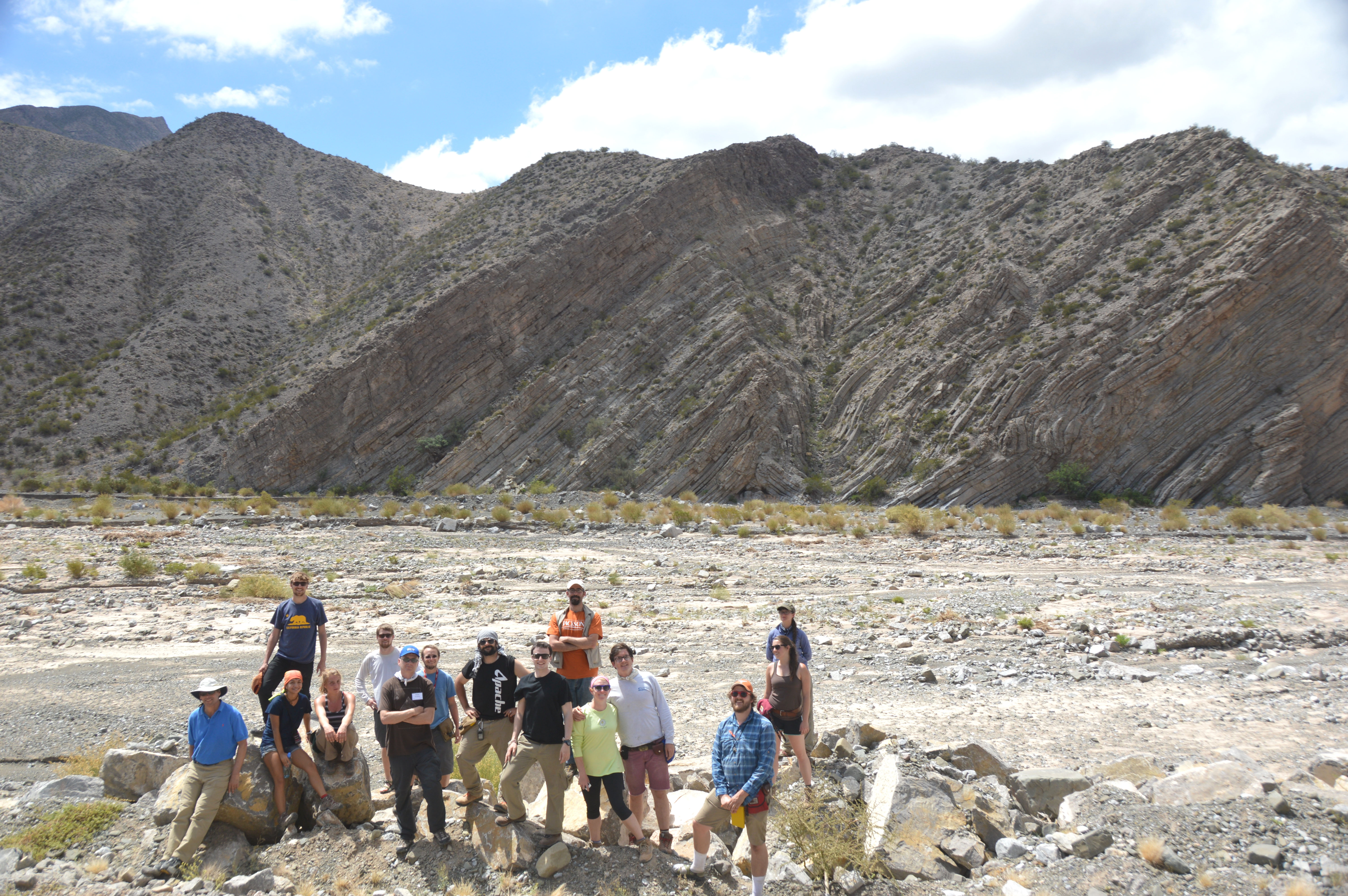
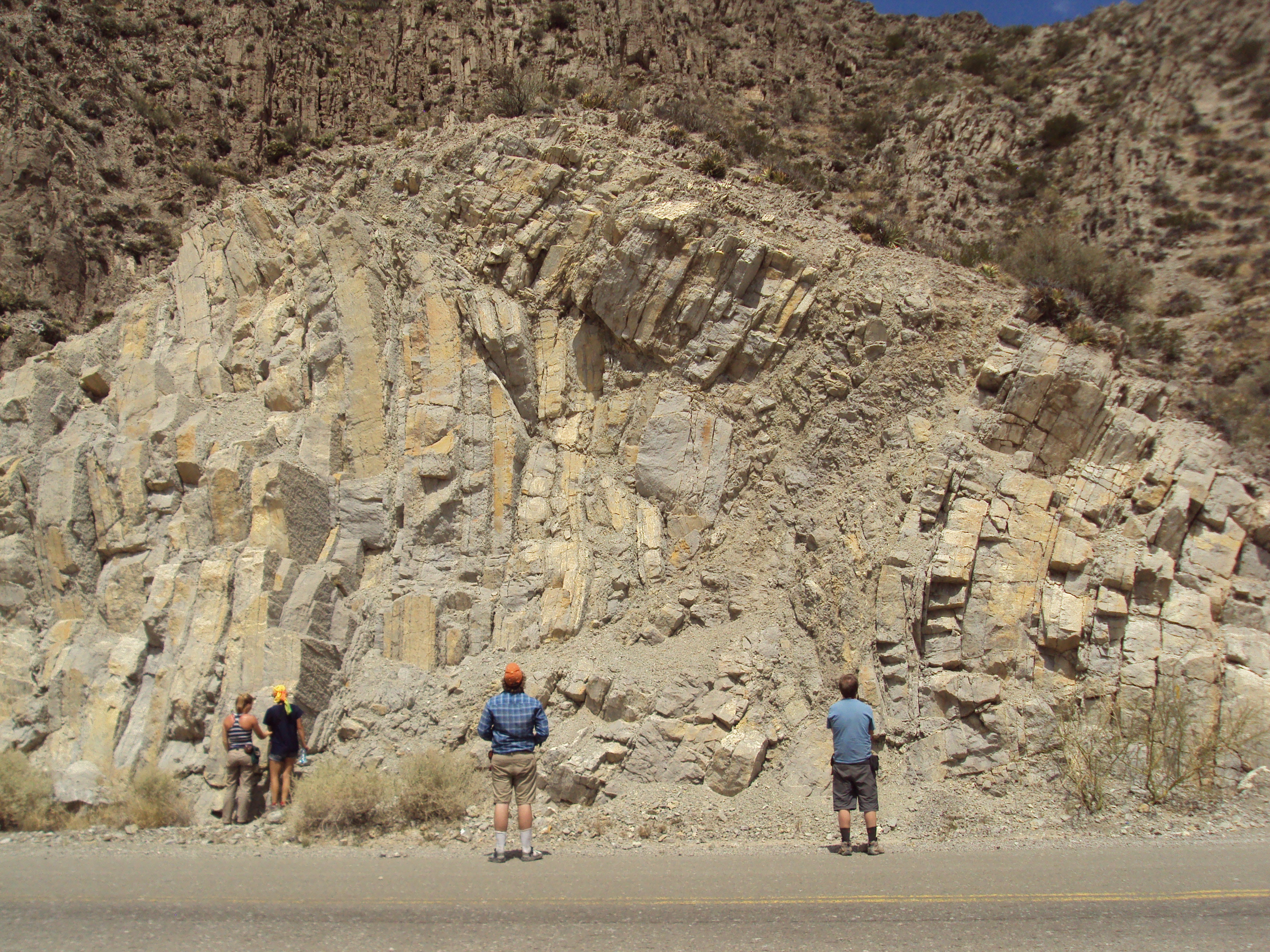
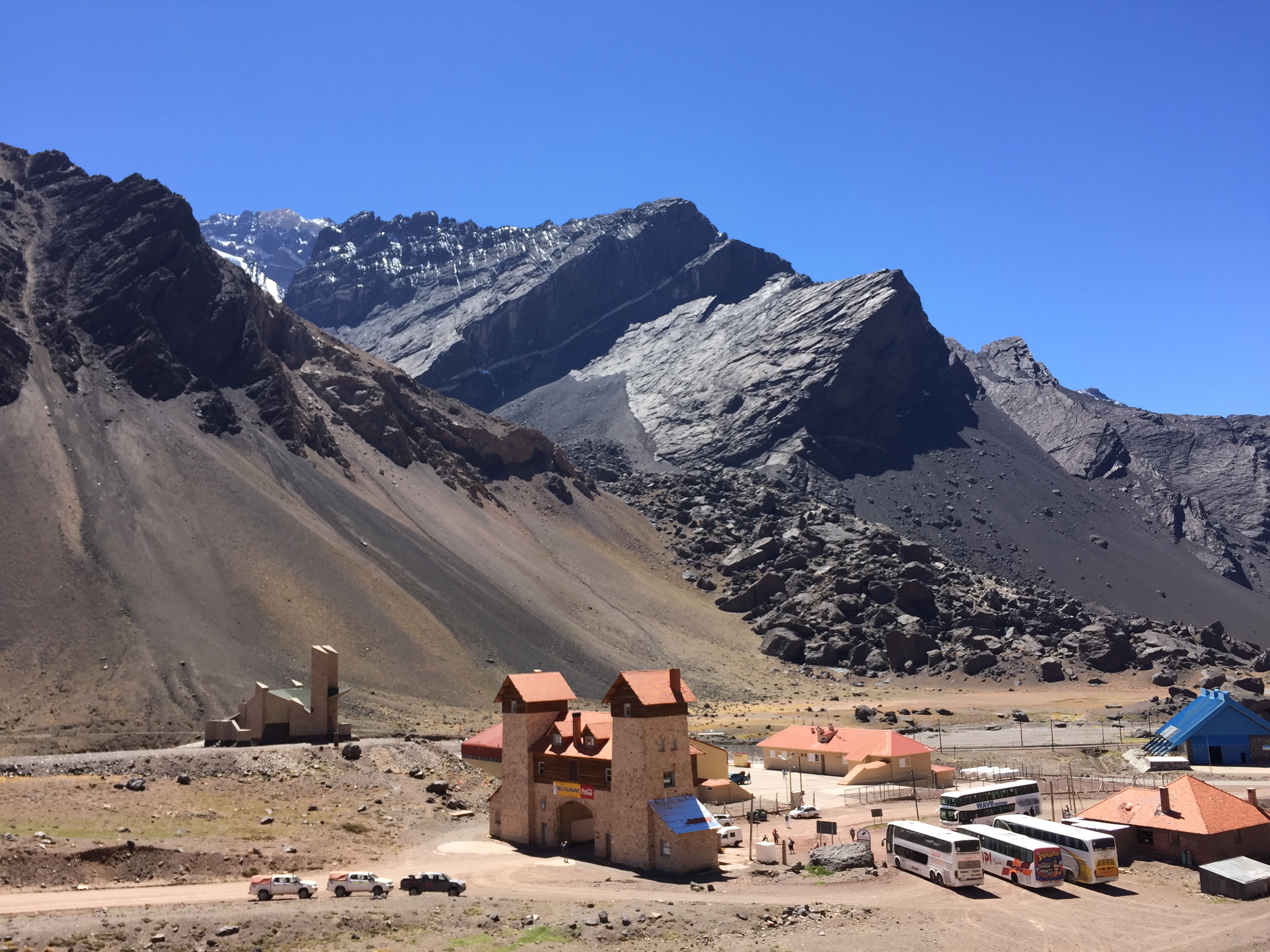
The rich geologic history and spectacular landscape of the Andes of Argentina provided the backdrop for a spring 2015 field trip exploring sedimentary basin responses to Paleozoic terrane accretion, Mesozoic extension, Cenozoic flat-slab subduction and fold-thrust deformation. Highlights within the Aconcagua, Mendoza, San Juan, and Malargüe segments of the Andean fold-thrust belt and coupled foreland basin included inversion structures, folded thrusts, growth strata, 90° angular unconformities, conglomeratic unroofing sequences, ignimbrite complexes, modern landslides, active fault scarps, pillow basalts, and world-famous source rocks and fossils of the Vaca Muerta Formation. The trip was led by Professor Brian Horton of the Department of Geological Sciences and Institute for Geophysics as a component of the Sedimentary Basin Analysis (GEO 383S) spring graduate course.
Participants included a group of 20 UT graduate students and collaborating academic and industry researchers from the Universidad Nacional de San Juan (UNSJ) and the national oil company Yacimientos Petrolíferos Fiscales (YPF).
As a key region for active NSF-funded research by Horton—along with co-investigator and former JSG postdoc N. Ryan McKenzie, UNSJ professor Patricia Alvarado, and JSG graduate students Sebastian Ramirez, Chelsea Mackaman-Lofland, and Tomas Capaldi—the students were able to incorporate new research results and appreciate current debates for South America concerning the sedimentary and tectonic evolution of this archetypal ocean-continent convergent margin.
To assess basin histories, the students integrated their own observations of facies assemblages, stratigraphic sections, paleocurrents, and conglomerate clast compositions with new detrital zircon U-Pb geochronological data, (U-Th)/He thermochronological results, and structural and seismic reflection constraints. The students greatly appreciated interactions with UNSJ students Gustavo Ortiz and Paola Orozco, YPF senior geologist Facundo Fuentes, and US consulting geologist Kurt Constenius. The students departed South America with a broader understanding of the intricate stratigraphic and tectonic records along Andean-type convergent margins, and important implications for geohazards, climate-tectonic linkages, and exploration for conventional and unconventional resources.
Back to the Newsletter