Gulf Coast Coal Holds Billions in Critical Minerals. But the Economics are Tricky.
June 11, 2026
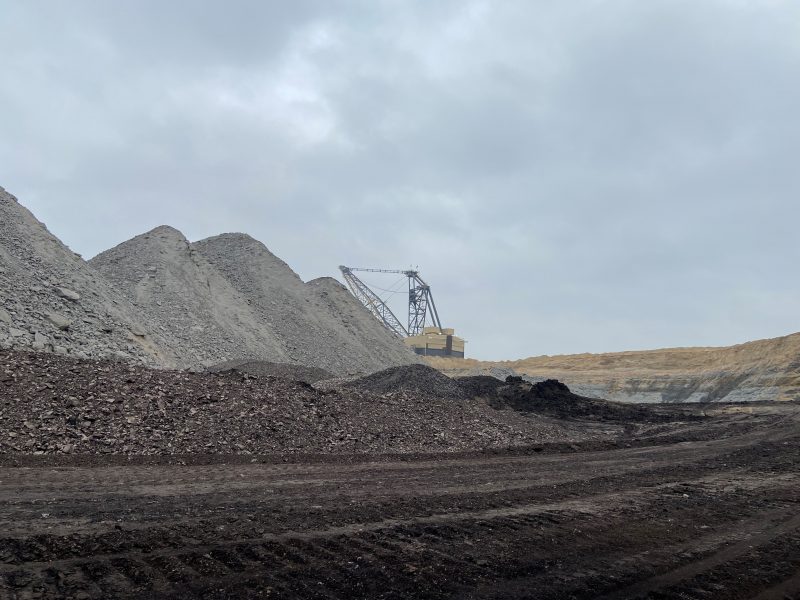
Researchers from The University of Texas at Austin have found that there’s a significant amount of rare earth elements trapped in the coal and coal ash supply of the Gulf Coast — with a total value of over $187 billion.
However, when broken down by the ton, the value of rare earth elements is relatively low: less than $5 per ton for both coal and coal ash. While that return is likely not enough to found a new industry for exclusively extracting the rare earth elements, it could be appealing for companies that are already processing coal and coal ash for other purposes — from fuel to road materials.
“You need to find some way to use byproducts [to make it worthwhile],” said study co-author Brent Elliott, a research associate professor at the Bureau of Economic Geology, a research unit of the UT Jackson School of Geosciences. “If you’re already mining the coal, the rare earth elements could be a side hustle.”
The research was published in the International Journal of Coal Science & Technology.
The study follows a 2024 study led by bureau researchers that calculated that $8.4 billion worth of rare earth elements could be extracted from accessible coal ash supplies around the country. Both studies were funded by the U.S. Department of Energy as part of a larger initiative to characterize domestic sources of critical minerals and rare earth elements. These elements are essential for a host of modern technology, from computers to batteries. Currently, the U.S. imports about 70% of rare earths from China.
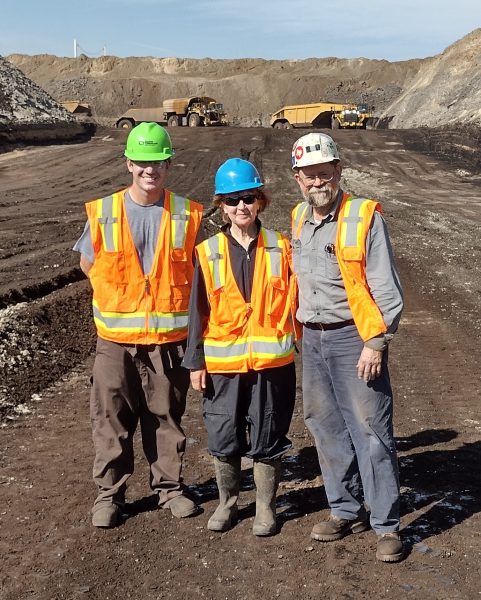
To conduct the more recent study, researchers analyzed the amount of rare earths contained in 118 samples from coal mines and coal ash, with most of the samples coming from the U.S. Geological Survey’s archives. The coal is an immature brown coal, called lignite and was obtained from 13 mines: 10 in Texas, two in Louisiana, and one in Mississippi. The samples also included coal from an abandoned mine in Arkansas and two clay pits in Tennessee and Kentucky.
They calculated that about $186 billion worth of rare earth elements are in the 58 billion metric tons of coal from mines in the Gulf Coast region. This works out to a rare earth value of about $3.20 per ton of coal, assuming a 70% extraction yield. For the 258 million tons of coal ash that is in landfills and detention ponds in the region, there’s a total of $1.2 billion in rare earths, or a value of about $4.40 per ton of coal ash, assuming a 30% extraction yield.
Most of the rare earths in the coal and coal ash supply are the type needed for manufacturing magnets, which are used in a range of technological applications.
The coal or lignite analyzed in this study contains, on average, fewer critical minerals (about 60 percent) than the amount found on average in the Earth’s upper crust. Rare earth elements aren’t that rare generally speaking — it’s that they’re difficult to find in concentrations that make economic sense to extract.
Still, what makes coal potentially attractive, researchers said, is that the coal is available and the rare earths are readily extractable with chemicals. The rare earth elements in the coal are associated with the organics, rather than the mineral phase, which makes the readily extractable. About 70% of rare earths in coal can be recovered with a weak acid that’s environmentally benign. What’s more, the researchers did find some local hot spots. For example, the Gibbons Creek mine in Central Texas has rare earth element levels 17 times the average found in the Earth’s upper crust, an outlier that might be due to region’s volcanic past.
All in all, the study suggests that rare earth elements could be a great value add for industries already working with coal as an input. The same goes for coal ash, which contains a much more concentrated supply of rare earth elements – about four times the median value of that found in coal because the rare earth elements are concentrated in the ash after burning the coal.
“This is an advantageous aspect of having critical minerals inside that coal material,” said the study’s lead author Bridget Scanlon, a research professor at the bureau. “There are all sorts of repurposing and recycling possibilities.”
For example, coal-powered energy plants could extract rare earths before burning coal. Coal in one of the plants is used to produce granulated activated carbon used for water treatment. And coal ash is already put to use in numerous products, from road asphalt to bricks.
However, extracting the rare earths from coal ash is more difficult than from the raw coal because the rare earth elements are in the mineral phase. The same weak acids that produce a high yield from coal only extract up to 5% of the rare earths in coal ash. Stronger acids can give better yields — about 30% — but are more expensive and difficulty to work with and dispose of.
“So, there’s a tradeoff there,” said Scanlon. “It’s not just the concentration of rare earth elements— it’s the extractability and the processing, all that sort of thing.”
Coal and coal ash can have multiple endpoints. A current initiative led by Elliott at the bureau is working to match waste products, like coal ash, to industrial companies that can extract valuable materials from them. James Hower, a study co-author and research professor at the University of Kentucky who studies coal products, agrees that the “whole hog” approach is needed to make coal products profitable.
“There needs to be the recognition that you have to get more out of it as a product, not just a little range of elements that are getting the attention,” he said. “The analogy to this is really the meat packing industry. You’re not selling a little bit of meat. You’re selling the whole hog.”
For more information, contact: Anton Caputo, Jackson School of Geosciences, 210-602-2085; Monica Kortsha, Jackson School of Geosciences, 512-471-2241