
Jessie Maisano Retires from UTCT Lab After a Legendary 26 Years
When Jessie Maisano walked into The University of Texas at Austin’s geosciences building as a postdoc in January 2000, she was joining an enterprising team of researchers who were working on something new. In their lab under the staircase on the first floor, they were using a high-resolution CT scanner — not to see inside of hospital patients, but to look inside of things like meteorites, fossils, and Komodo dragons. This lab, The University of Texas High-Resolution X-ray Computed Tomography Facility, or UTCT, was the first of its kind in any academic research department across the globe.
When Maisano retires later this month after 26 years at the facility, she will leave behind a lab and a field that have utterly transformed. More than 100 universities and museums all over the country now have their own high-resolution CT scanners and teams who run them. And many of them share best practices that were developed right here at UTCT. This is in part because Maisano has prioritized not only helping to advance the research of UTCT’s clients, but also to develop the skills and knowledge of the larger scientific CT community.
“The DNA of UTCT runs through every academic, non-clinical CT lab in this country,” said Ed Stanley, associate curator of digital imaging at the Florida Museum of Natural History. “I couldn’t overstate how important Jessie and UTCT have been to the field.”
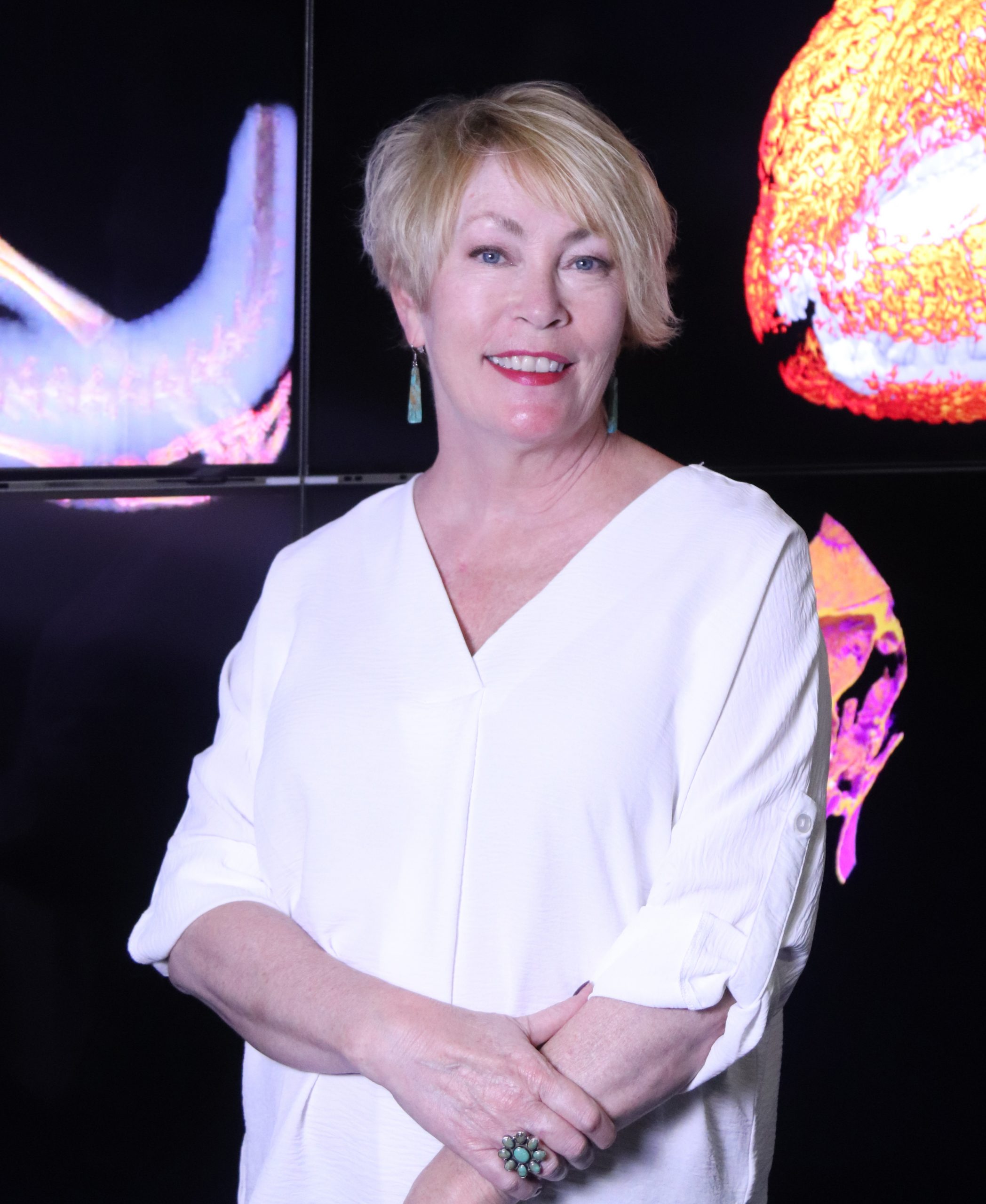
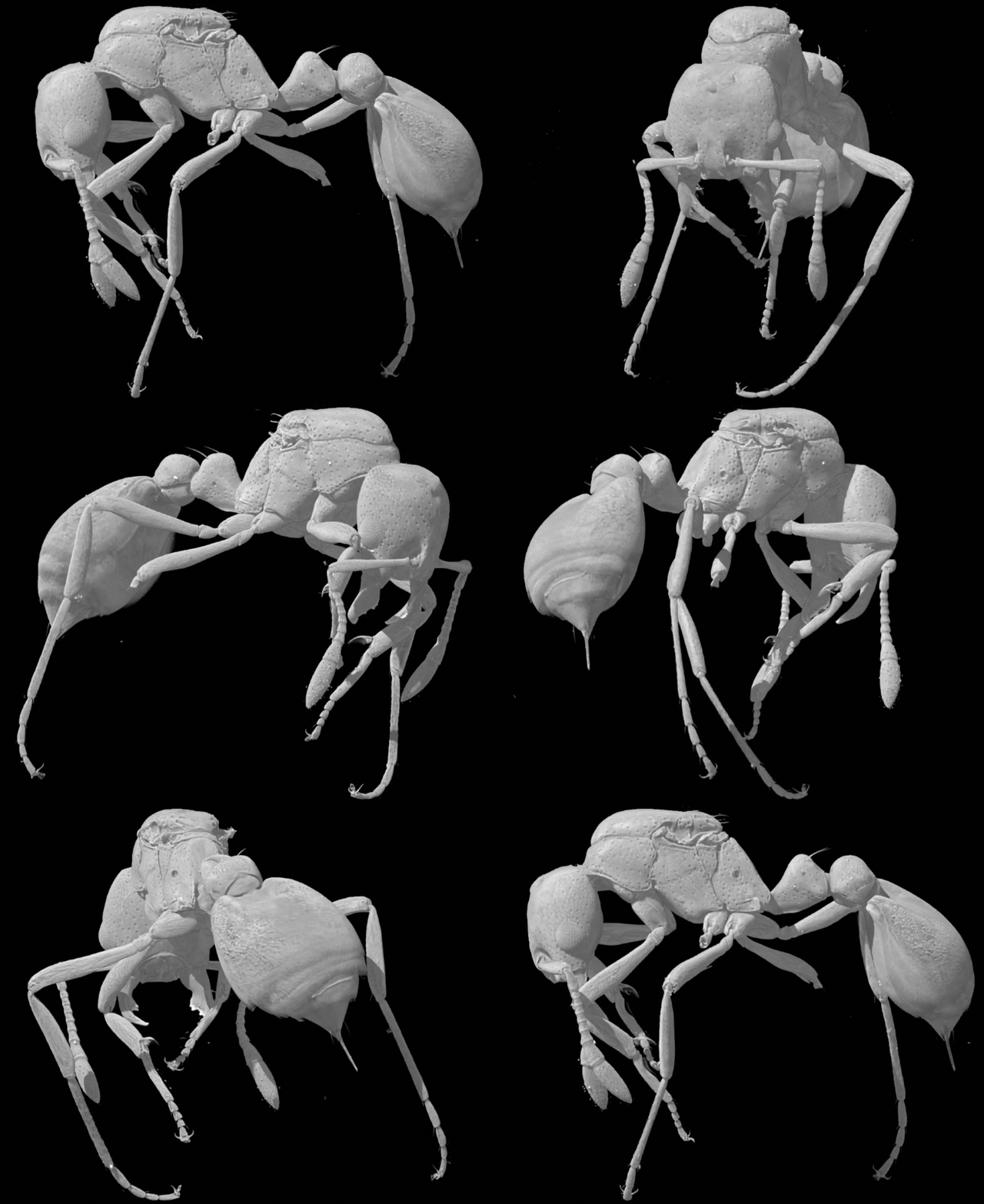
Over the years, and especially for the last 18 as manager of the lab, Maisano has been at the heart of UTCT. The lab receives samples from around the world, handling specimens from less than a millimeter to nearly a meter in length, many of them one-of-a-kind; a few of them quite famous. Maisano has helped to scan and create 3D renderings for thousands of specimens, ranging from a day-old Gila monster to a Cheeto to a cache of meteorites to the oldest surviving photograph in the world. And she has kept incredibly high standards for what makes a good scan. Scientists who send their specimens to UTCT know that they’re getting every little bit of possible information back out of them. This drive to produce the very best work every day is central to how Maisano operates.
“It’s been a really nice, interesting, stimulating, challenging place to work. And I’m very proud to have been a part of it,” she said.
After Maisano earned her doctorate in vertebrate paleontology at Yale, she came to UTCT as a postdoctoral fellow to work on DigiMorph, a first-of-its-kind digital library for CT visualizations of biological and paleontological specimens. Funding for this project ended in 2008, but Maisano has faced no shortage of interesting pieces to scan and digitally render in all their three-dimensional glory.
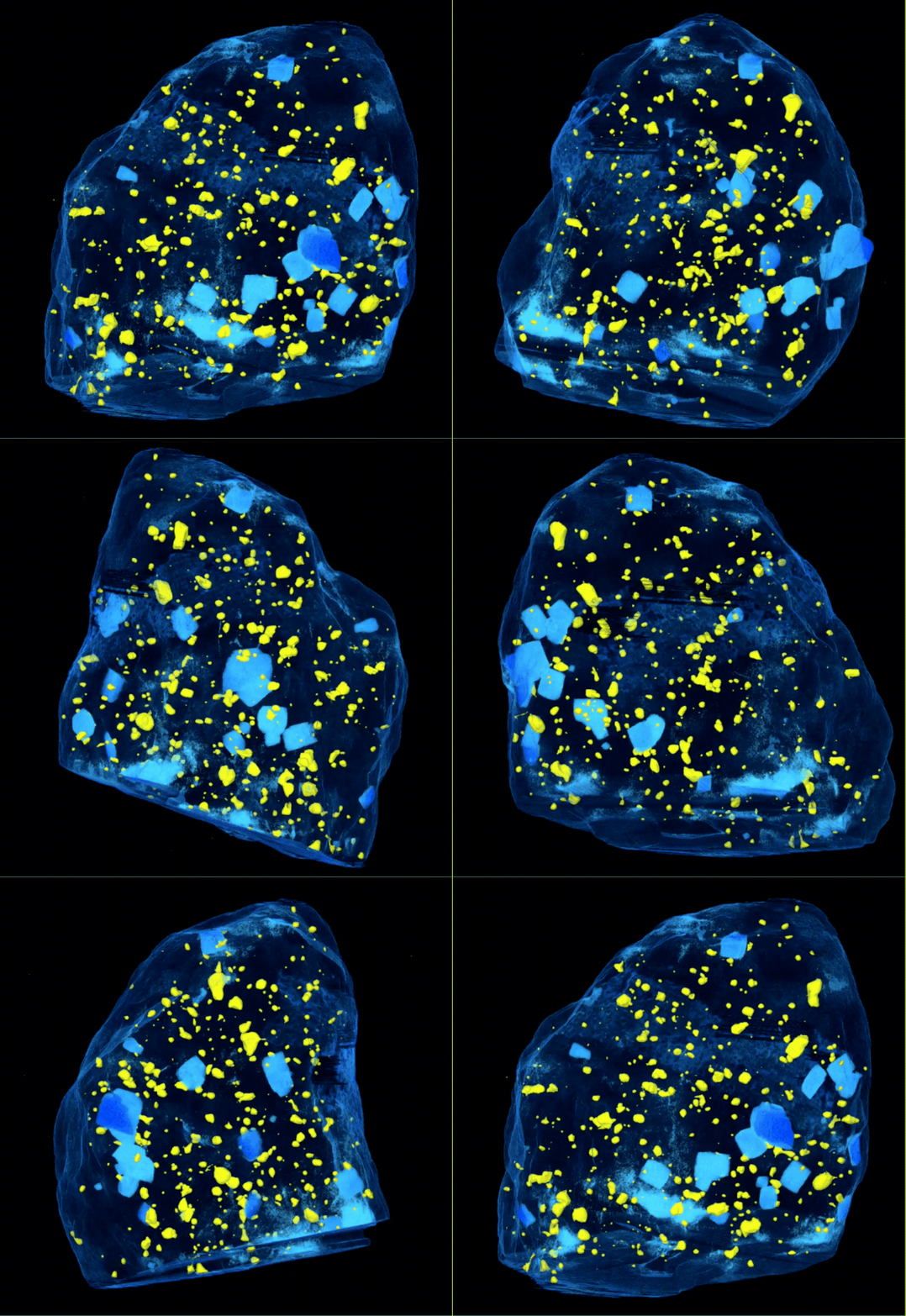
In 2008 UTCT famously scanned Lucy, the 3.2-million-year-old early human ancestor, revealing new details about a fracture in her upper arm bone. This specific type of break showed that she most likely died from falling from a considerable height. This scan came with some fanfare; Lucy stopped at UTCT for 10 days on her U.S. exhibition tour under tight secrecy and security that included an armed guard stationed inside the lab 24/7. Then there were sealed drive tubes cored from the Moon during the Apollo missions 50 years ago. By this point, in 2019, NASA had their own CT scanner, but they trusted that UTCT would give them the highest-resolution data possible on these irreplaceable samples.
Despite the growth of high-resolution CT scanning in the U.S. and globally, UTCT has consistently maintained its reputation as both the first and the best in the game. Rich Ketcham, a founding member of UTCT in 1997 and its longtime director, attributes much of the lab’s continued success to Maisano’s scrupulous attention to detail and high standards for scanning and image processing. But even more so, it was Maisano’s mission to share the resources and expertise she had acquired in this field that helped keep UTCT on the map.
“She really took off with doing this community building — grant-funded community building, the best kind — to increase our visibility,” Ketcham said. “She saw a need, went off, and did it.”
As high-resolution CT scanning became more popular in the scientific community, Maisano saw a need for professional development and skill sharing. She chaired the first five biennial symposia for ToScANA, (Tomography for Scientific Advancement North America), which draws together researchers across all scientific disciplines united by their use of CT scanning. And she is the principal investigator at UT for the National Science Foundation-funded Non-clinical Tomography Users Research Network (NoCTURN), which developed a much-needed Rosetta Stone for CT terminology, K-12 education kits, a world map of CT facilities, and career path guidance, among other things — all aimed at lowering the barriers to entry and minimizing reinvention of the wheel as new facilities come online.
“Even if you’re the first and the best, you still have to engage. That’s why I’ve done these things,” Maisano said.
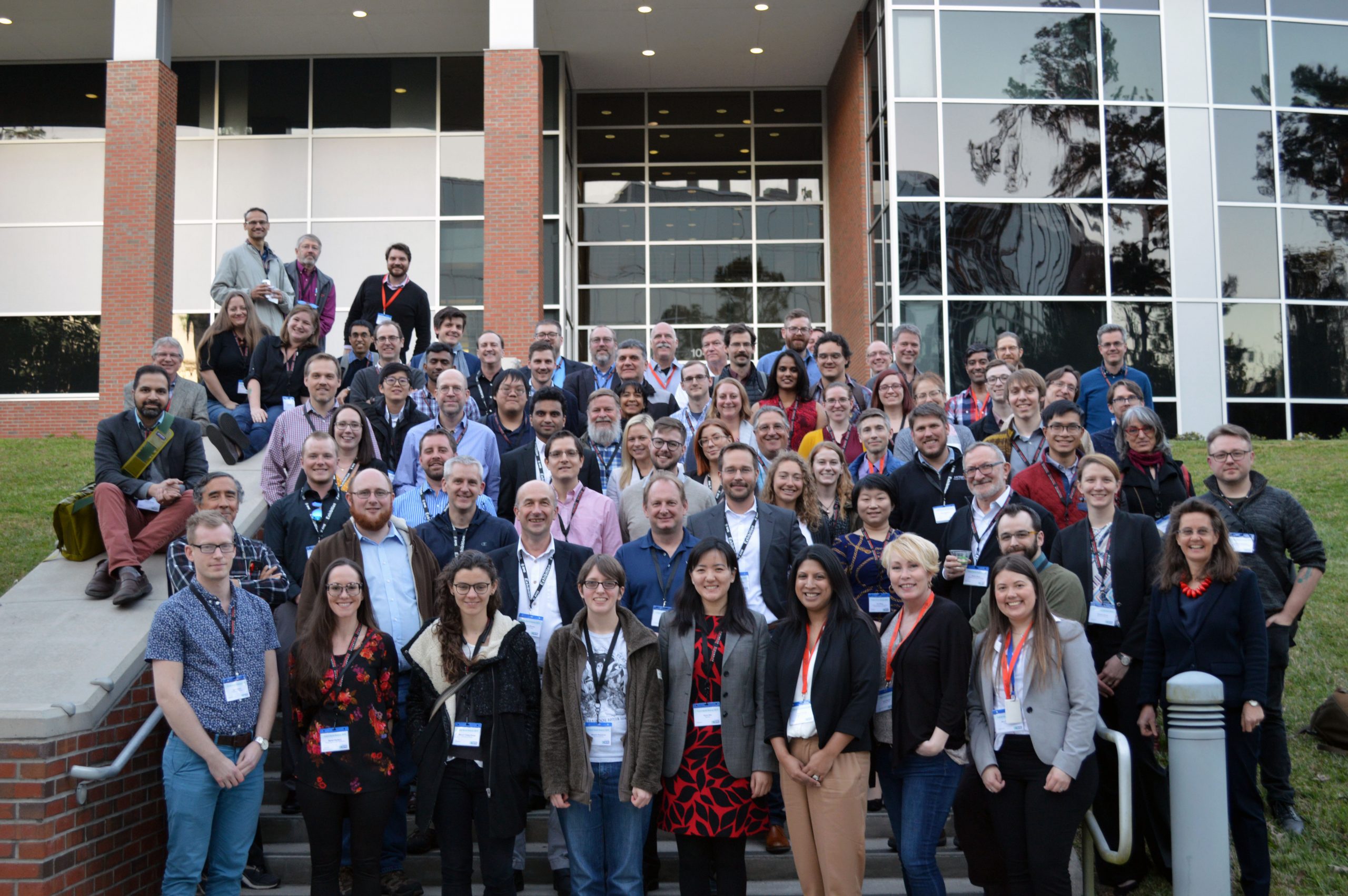
Over the years, Ed Stanley of the Florida Museum of Natural History has worked closely with Maisano as an organizer for both ToScANA and NoCTURN. They’ve become close collaborators. But Stanley first encountered Maisano as more of a fan.
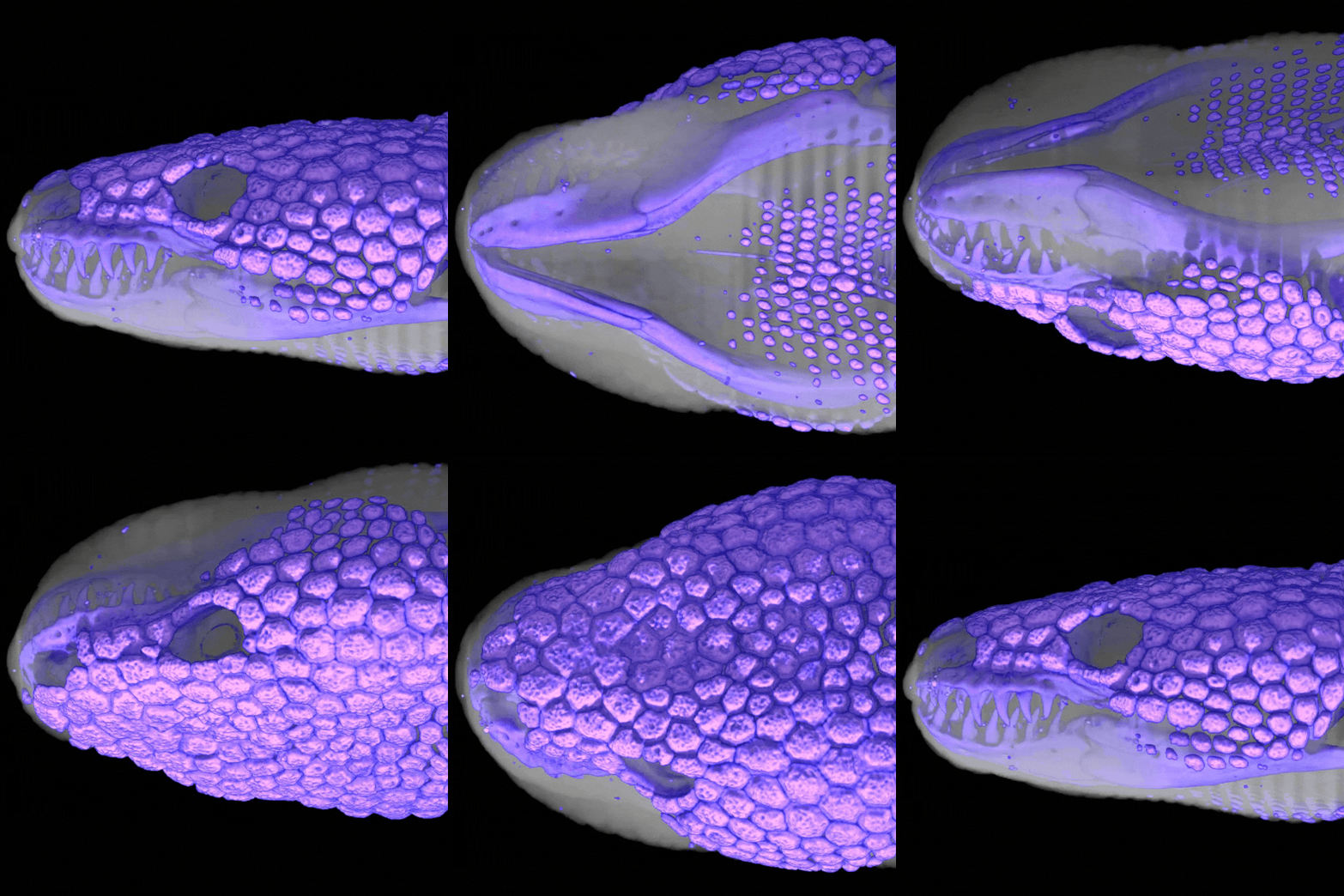
When he was a graduate student, he picked up a 2002 paper by Maisano about a strange Bornean lizard called Lanthanotus. It’s an enigmatic species — the only living representative of its lineage — with only a few specimens ever recovered. After scanning a Lanthanotus specimen at UTCT, Maisano discovered that its osteoderms — bony armor plates embedded in the lizard’s skin — were far more extensive than previously known. The CT scans showed these plates beautifully, and Maisano’s scans inspired Stanley to use the technology for his own doctoral work on lizards.
“It was like a light bulb went off in my head, and I could see exactly where I wanted my research career to go with that,” he said.
Stanley didn’t meet Maisano until he did a training at UTCT in 2011. Maisano and other researchers in the lab showed attendees how CT works, how to complete a scan, and how to do the post-processing. Stanley, who worked at the American Museum of Natural History at the time, modified the lessons into an undergraduate training course.
“So, everything I’ve done has basically been a pale imitation of Jessie Maisano’s back catalog,” he said with a smile. “And if you look now, there’s CT labs around the country, but they’re all at least in part offspring labs from UTCT. I think you’d have to go a long way to find an academic, industrial CT lab where the technicians hadn’t talked to Jessie or hadn’t attended a workshop.”
After Maisano retires, the UTCT lab’s work will continue with the other lab personnel: David Edey, Romy Hanna and Jaimi Gray.
As for what’s next for Maisano, she and her husband John Maisano (a sculptor, also retired from UT) are fulfilling their dream of moving to the Atlantic coast. Once settled, she’ll see what opportunities cross her path. She’s both ready for the next page, and thankful for what these last 26 years have given her.
“I had a number of people say what a figurehead I had been to them coming up through the ranks. And first of all, it made me feel really old!” Maisano said. “But also, that means a lot. All anybody ever wants is to be deluded enough to think that they’ve had an impact. And it’s good fun.”
The University of Texas at Austin
Web Privacy | Web Accessibility Policy | Adobe Reader