Chenguang Sun Wins NSF CAREER Award
October 6, 2026
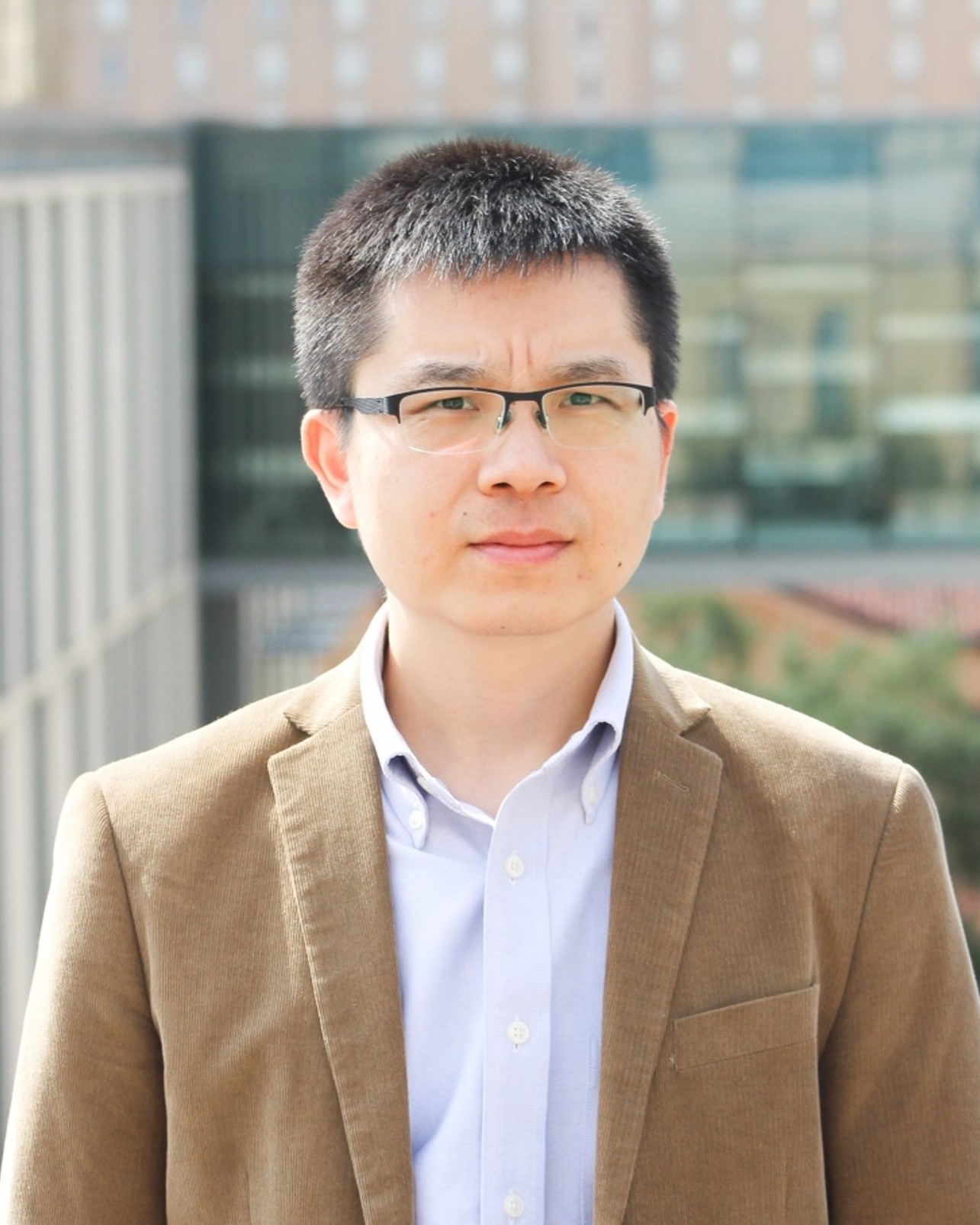
Chenguang Sun, an assistant professor in the Department of Earth and Planetary Sciences, has received a prestigious Faculty Early Career Development Program (CAREER) Award from the National Science Foundation. This award supports early-career faculty who have the potential to serve as academic role models in research and education.
Sun is a petrologist and geochemist who studies the thermal and chemical evolution of Earth and other rocky planets.
With this award, Sun plans to study carbonatites, rare igneous rocks associated with high concentrations of important rare earth elements such as lanthanum, cerium, praseodymium, and neodymium. These elements have many technological applications and are used in electric-vehicle batteries, LED lighting, aircraft engines, and high-performance magnets. Sun will study how these elements move and become concentrated as carbonatite magmas cool and release fluids.
“These unusual magmas appear to be exceptionally effective at concentrating rare earth elements, which normally occur only in trace amounts within Earth,” Sun said.
Sun’s project seeks to understand the processes that transport and concentrate rare earth elements during the formation of major deposits in carbonatite systems.
He’ll do this by recreating carbonatite magmas under controlled laboratory conditions and investigating whether fluids released from these magmas can extract, transport, and concentrate rare earth elements. These fluids can contain carbon dioxide, water, sulfur, fluorine, and chlorine, and their composition may strongly influence how efficiently rare earth elements are transported.
“By identifying the physical and chemical conditions that favor rare earth enrichment, this work may ultimately help scientists interpret natural deposits and develop better informed strategies for critical mineral exploration,” Sun said.
This research will also become a learning opportunity for Jackson School students. Laboratory data will be used to calibrate thermodynamic models for virtual classroom experiments where students will vary conditions such as temperature, pressure, and fluid composition to explore how rare earth elements move through magmatic systems. They will then apply what they learn to real-world questions about how critical mineral deposits form.
Peter Flemings, chair of the Department of Earth and Planetary Sciences where Sun is on faculty, said that Sun’s expertise is well-suited to answer this vital scientific question with major societal impact.
“I’m thrilled that Chenguang has received this CAREER Award. He has identified a fundamental scientific question, and he has developed an integrated scientific and educational effort to tackle it. Much of the world’s rare earth elements reside in carbonatites, yet the mechanism by which they are concentrated remains a first-order question,” Flemings said. “Chenguang has the potential to unravel this fundamental problem. I look forward to his discoveries and to watching a generation of students tackle this problem.”