Geophysicist Taiyi Wang Joins Department of Earth and Planetary Sciences
August 31, 2026
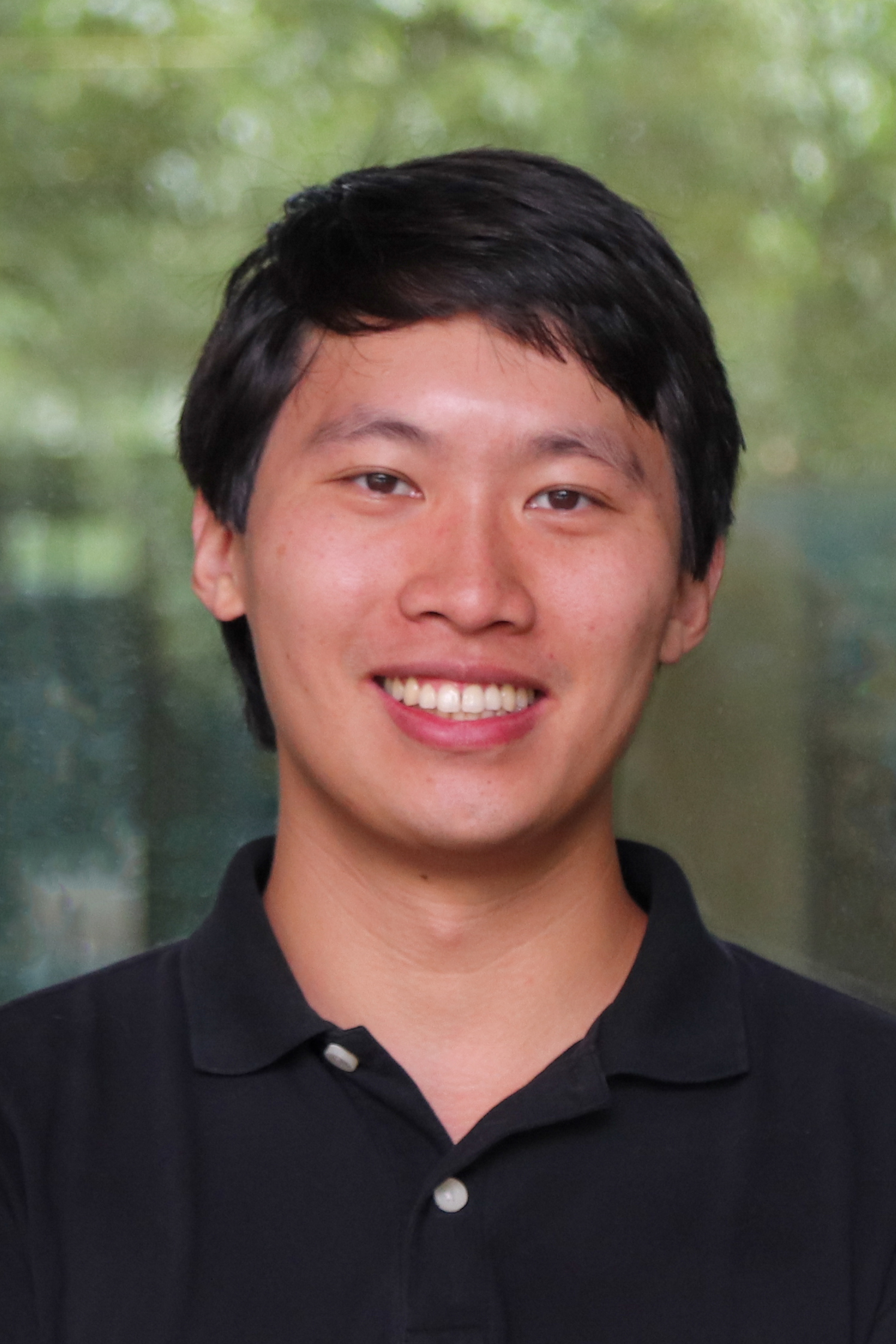
Taiyi Wang, a geophysicist who studies the mechanics of earthquakes and volcanos, joined the Department of Earth and Planetary Sciences as an assistant professor on Aug. 1.
Earthquake mechanics and volcanology are traditionally separate disciplines in the geosciences. Wang combines them in his study of the fractures under the Earth’s surface and the fluids — such as magma or water — that flow through them.
“In the most fundamental way, whenever there’s a large amount of fluid moving around in the crust, it creates stress, and stress can lead to small earthquakes. These small earthquakes are important for understanding what volcanos are doing,” Wang said.
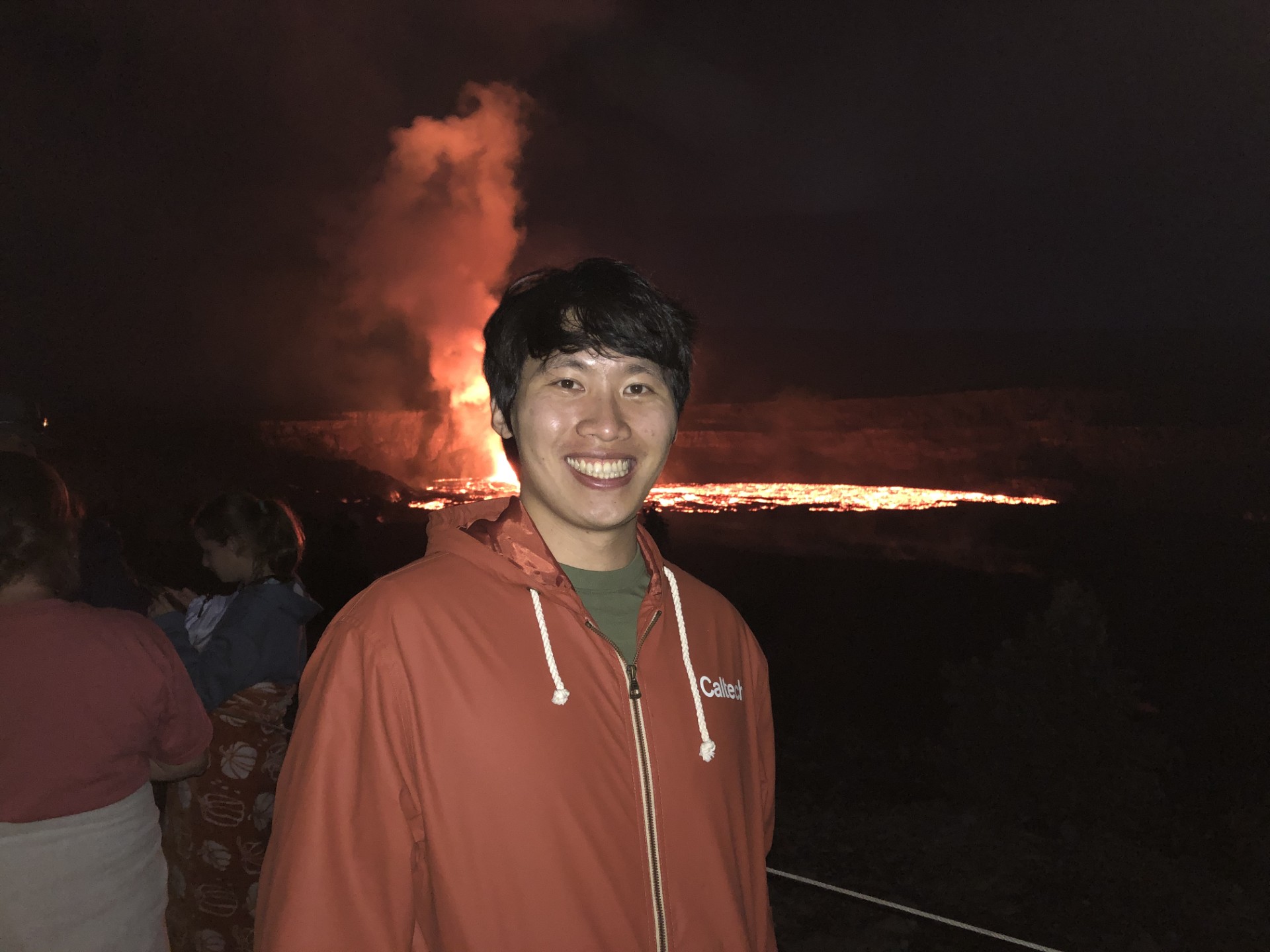
Wang first got interested in studying volcanology when he was an undergraduate at Carleton College. He took a three-month field course in New Zealand where he saw active volcanos for the first time. The experience made him want to understand everything about how they work, and what subsurface processes lead to eruptions.
Wang’s expertise lays in coupling observations motivated by geology with the mathematics and mechanics needed for physics-based modeling.
“I like both perspectives to understand why things happen, and geophysics naturally combines them both,” he said.
In graduate school at Stanford University, Wang wrote his dissertation on the dynamics of caldera collapse, and the role of earthquakes in modulating it. Caldera collapse sometimes happens when volcanoes erupt. Kilometers below the summit of a volcano is a magma reservoir — molten magma surrounded by crust. When the volcano erupts, this magma leaves the reservoir, which deflates like a balloon due to lack of pressure. This deflation can sometimes trigger caldera collapse, which is when kilometers of crust fall into the reservoir like a sagging cake. A famous example of this phenomenon is the 2018 eruption of the Kīlauea Volcano in Hawaii. The collapse caused thousands of earthquakes, 62 of which were magnitude 5 and greater.
In a recent paper published in the Journal of Geophysical Research, Wang and his collaborators performed computer simulations of caldera collapse earthquakes based on seismic records to learn about the dynamics of how they occur.
“The friction process on the ring fault is very integral to understanding how long the eruption is and how much magma comes out of it eventually,” Wang said.
Wang will be teaching an introductory seismology course in the spring semester. He’s excited to share with students what he finds so engaging about studying the Earth — the simple beauty of working to understand why certain phenomena happen.
“There’s complexity, but you can put order to the complexity by understanding it,” Wang said. “It’s like having a bunch of random books on the floor, then putting them on the shelf and organizing them together.”
Geodynamicist Thorsten Becker, a professor in the department and at the University of Texas Institute for Geophysics, said he was excited to have such a stellar new colleague in the field of solid earth system sciences.
“There are great opportunities in advancing physics-based models of volcanic systems and using these to probe the multi-physics dynamics underlying natural hazards,” Becker said. “Taiyi complements and expands our strengths at the Jackson School to do so.”
Peter Flemings, chair of the Department of Earth and Planetary Sciences, said he was thrilled to have Wang join the school’s impressive roster of geophysicists.
“Taiyi greatly strengthens a growing effort at the Jackson School to study fluid-solid coupling in earth processes,” Flemings said. “Today, he is illuminating how volcanoes work. However, his potential impact, in research and the classroom, will be even broader. Fluid-solid coupling is at the core of many earth processes ranging from earthquakes, to hydraulic fracturing, to landslides.”