
New Ice Age Animals and Slice of Earth History Found in Central Texas Water Cave
March 25, 2026
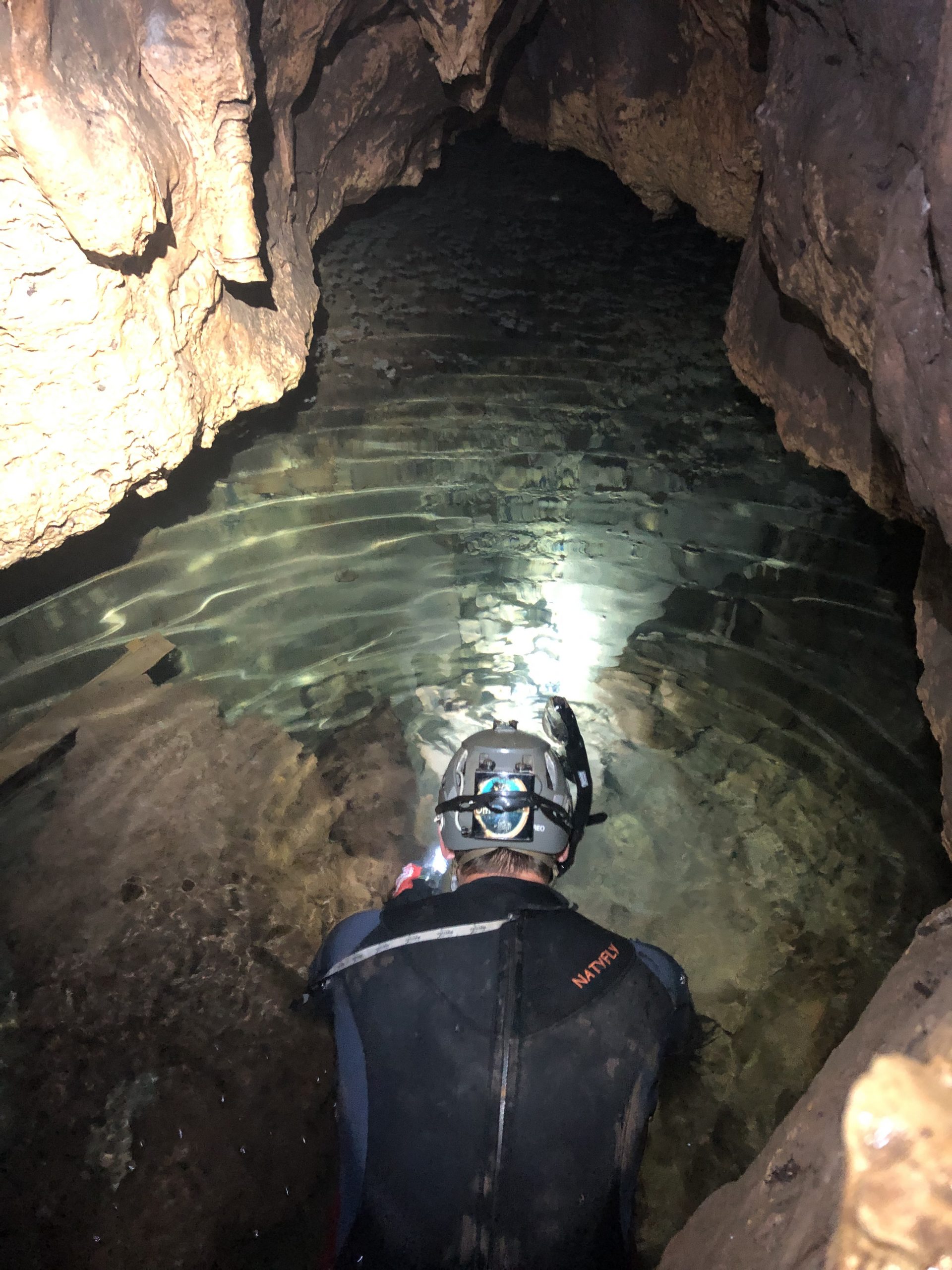
A paleontologist from The University of Texas at Austin has discovered the fossilized remains of Ice Age animals that have never been found in Central Texas before — and he came across the bones while snorkeling for fossils in an underground stream.
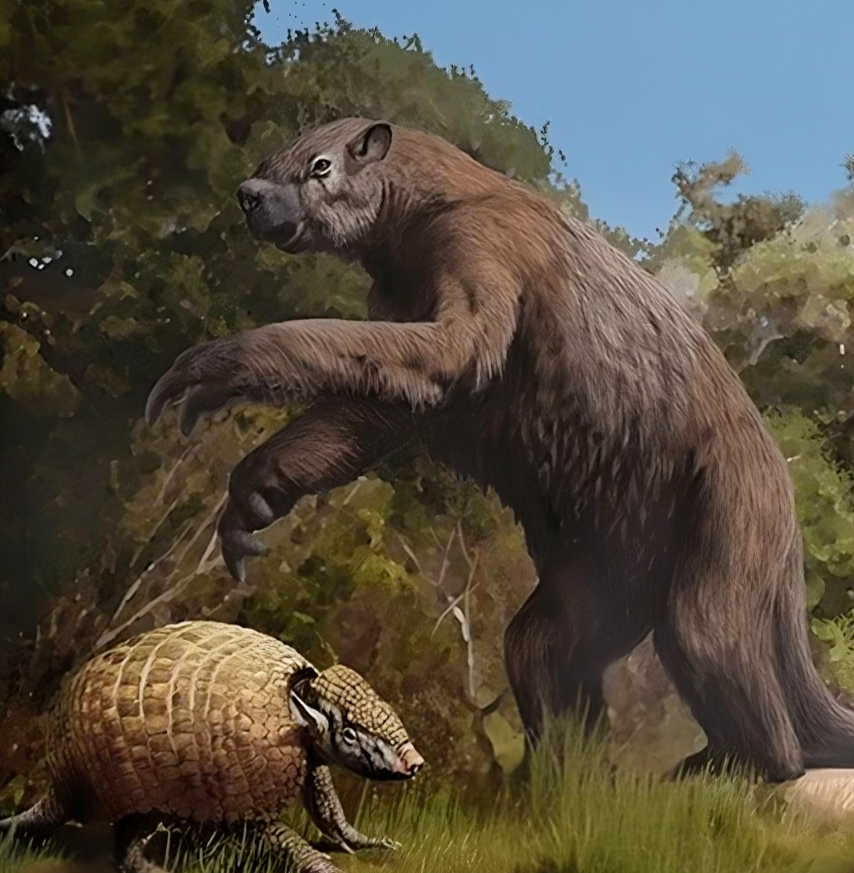
The new fossils are from a giant tortoise and an armadillo relative called a pampathere that was about the size of a lion. Paleontologist John Moretti discovered their shell and armor fragments, along with dozens of other fossils, while conducting the first paleontological study of a Texas water cave.
Water caves are conduits for underground streams. They are important passageways for groundwater in Central Texas, and have been anecdotally described by cavers as rich in fossils. Moretti said the cave he investigated lived up to that reputation.
“There were fossils everywhere, just everywhere, in a way that I haven’t seen in any other cave,” said Moretti, who recently earned his doctoral degree from the UT Jackson School of Geosciences. “It was just bones all over the floor.”
The cave he explored — called Bender’s Cave — is located on private property in Comal County. The bones entered the cave through sinkholes during erosion and flooding events that happened thousands of years ago, and have remained there ever since.
Moretti said that there’s evidence that the water cave fossils could be from the last interglacial, a warm period that occurred around 100,000 years ago during the last Ice Age. Despite extensive paleontology research in the area dating back almost a century, fossils from this period have not been found before in Central Texas.
“This site is showing us something different, and that’s really important because of all the work that’s been done in this region,” Moretti said. “If it is interglacial in age, it’s a new window into the past and into a landscape, environment, and animal community that we haven’t observed in this part of Texas before.”
Research on the water cave fossils was published in March in the journal Quaternary Research.
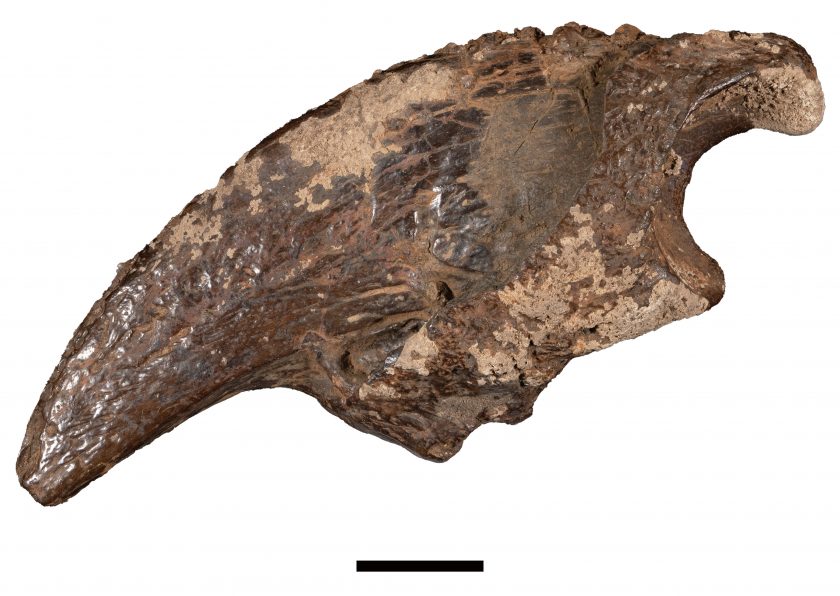
Moretti and co-author John Young, a local caver, made six trips into the cave from March 2023 to November 2024, collecting fossils from 21 different zones. Although water levels in the cave can vary drastically depending on rainfall, the stream depth during their sampling trips was usually only a few feet deep. Finding fossils entailed crawling along the streambed with goggles and a snorkel. Collecting them was as simple as plucking them from the bottom of the stream bed — no excavation from rock required. Other notable finds include a claw from a giant ground sloth and bones from saber-tooth cats, camels and mastodons.
All the fossils are polished, rounded and have a similar degree of rusty red mineralization, which suggests that they were swept into the cave at about the same time. However, the lack of geologic material that makes sampling easy makes it difficult to determine the age of the bones through carbon dating or other precise dating means.
Moretti said that there are other signs that suggest that the fossils could be from an interglacial period.
Given the history of paleontology in Central Texas, one would expect these animals to already have been found if they were living at the same time as other younger fossils that have been discovered in the area.
Another clue is the matter of habitat and temperature. The ground sloth and mastodon were forest dwellers, and the giant tortoise and pampathere needed warm temperatures to thrive. The warmer interglacial periods may have had both these things. In contrast, during the cool glacial interval, Central Texas was a sprawling grassland.
There’s also the fact that the Bender’s Cave fossils have a lot in common with fossil sites in the Dallas area and Gulf Coast that are known to date back to the last interglacial period. Fossils from the giant tortoise, pampathere, and ground sloth have been found in these areas. When Moretti conducted a statistical analysis that grouped Ice Age sites in Texas based on the similarity of their fossils, Bender’s Cave was grouped with these interglacial sites rather than sites in Central Texas.
David Ledesma, an assistant professor at St. Edwards University who studies how lizards, frogs, and other small animals responded to environmental changes during the past Ice Age, said that the research shows that even in an area as well documented as Central Texas, there are new things to find.
“Some of the fossils that John has come across are species that we didn’t think would occur in this part of Texas,” said Ledesma, who was not part of the study. “That we’re still learning new things and finding new things is quite exciting.”
While it takes paleontological expertise to do this research, Moretti said that it’s important to note that most caves are on private property. Refining the picture of prehistoric Texas requires land owners and scientists to work together to explore the past.
“These connections and partnerships make possible a lot of the natural science that gets done in Texas,” he said. “It takes contributions from everyone — not just scientists at universities — to learn about the natural world we live in and depend on.”
For more information, contact: Anton Caputo, Jackson School of Geosciences, 210-602-2085; Monica Kortsha, Jackson School of Geosciences, 512-471-2241; Julia Sames, Department of Earth and Planetary Sciences, 210-415-9556.