
Slow Earthquake Caught in the Act
February 16, 2026
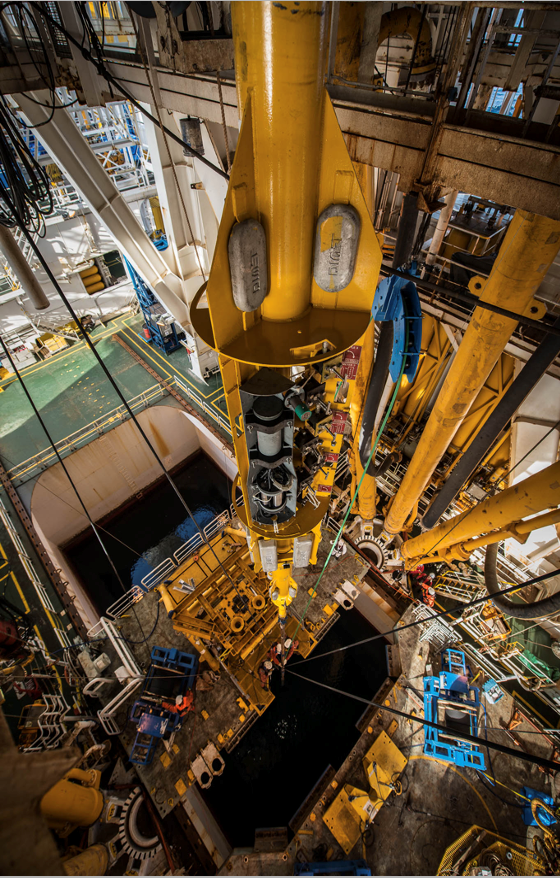
Scientists for the first time have detected a slow slip earthquake releasing tectonic pressure on a major fault zone at the bottom of the ocean.
The slow earthquake was recorded spreading along the tsunami-generating portion of a fault off the coast of Japan, behaving like a tectonic shock absorber. The discovery was made by researchers from the University of Texas Institute for Geophysics. Their results were published in Science.
Slow slip earthquakes take days or weeks to unfold. They are thought to be important for releasing stress as part of the earthquake cycle. The new measurements, made along Japan’s Nankai Fault, appear to confirm that.
Originating about 30 miles offshore, borehole sensors tracked the slow earthquake as it moved out to sea before dissipating at the edge of the continental margin. Each event happened in places where geologic fluid pressures were high. The research also showed that the part of the fault nearest the surface releases tectonic pressure independently of the rest of the fault.
The new knowledge will help scientists understand hazard at other faults, such as Cascadia, a massive earthquake fault facing the Pacific Northwest, which appears to lack Nankai’s natural shock absorber.