
Hydrothermal System Helped Life Recover After Dino-Killing Asteroid
February 16, 2026
About 66 million years ago, an asteroid slammed into the planet, wiping out all non-avian dinosaurs and about 70% of all marine species. But according to new research, the crater it left behind in the Gulf of Mexico was a literal hotbed for life, enriching the overlying ocean for at least 700,000 years.
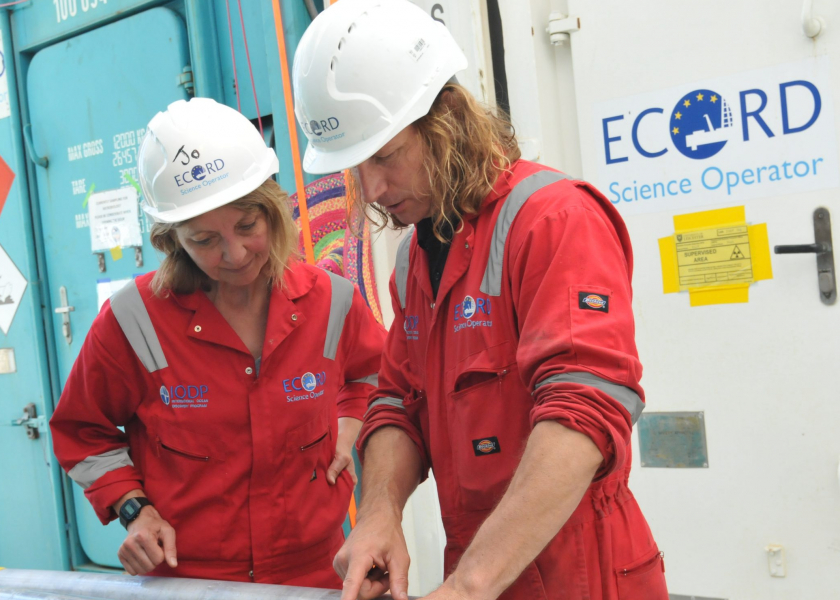
The finding comes from an analysis of a core sample from the asteroid’s impact site. The sample is from the 829 meters of core that were recovered in 2016 by a scientific drilling expedition led by the Jackson School of Geosciences.
In a study published in Nature Communications, scientists analyzed the core for the presence of a chemical element associated with asteroids called osmium. Traces of osmium were found, verifying that a hydrothermal system created by the asteroid impact helped marine life flourish by generating and circulating nutrients in the crater environment for hundreds of thousands of years.
Sean Gulick, a Jackson School research professor who co-led the 2016 expedition, is a co-author on the study.
The asteroid impact is well known for setting off a mass extinction. Gulick said that this research shows that impacts can be a catalyst for life, too.