
When Storing Hydrogen, Pore Size Matters
December 13, 2025
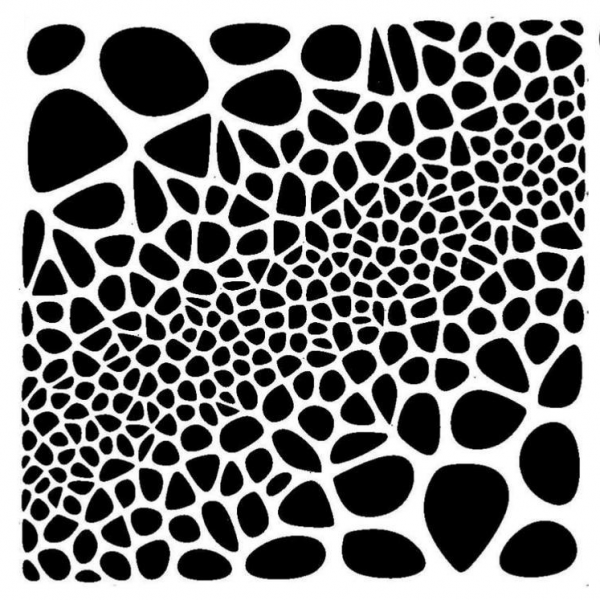
Hydrogen is an appealing energy source. However, its low volumetric density makes surface storage impractical for large amounts, meaning that geologic storage is a preferable solution for storage and transport.
Researchers studied how this would work in saline aquifers, which are widely available and offer a large storage capacity. The study looked at both the storage capacities and the residual hydrogen left after it was produced out of the reservoir in different geologic settings: homogeneous porous media, layered heterogeneous porous media, and fractured porous media.
Researchers fabricated three micromodels using silicon wafers to reproduce the water-hydrogen-brine rock systems in saline aquifers and conducted three cycles of injection and withdrawal for each scenario.
The results found that:
- Homogeneous porous media with larger pore sizes exhibited greater hydrogen storage capacity after injection and lower residual hydrogen after withdrawal.
- In layered heterogeneous porous media, hydrogen preferentially accumulated in the larger pore layers, while the smaller pore layers acted as barriers. Under certain conditions, the residual hydrogen could be up to five times as high as in homogeneous porous media.
- In fractured porous media, fractures with widths greater than the average pore size functioned as high connectivity channels, altering the fluid flow path. Conversely, narrower fractures (widths less than the average pore size) behaved as barriers during withdrawal, leaving up to three times as much residual hydrogen as wider fractures did.
Research conducted by Postdoctoral Fellow Ruichang Guo; Postdoctoral Fellow Hongsheng Wang; Associate Director Seyyed A. Hosseini
Bureau of Economic Geology
The research was published in July 2025 in ScienceDirect