
What’s Driving Permian Basin Earthquakes?
December 17, 2025
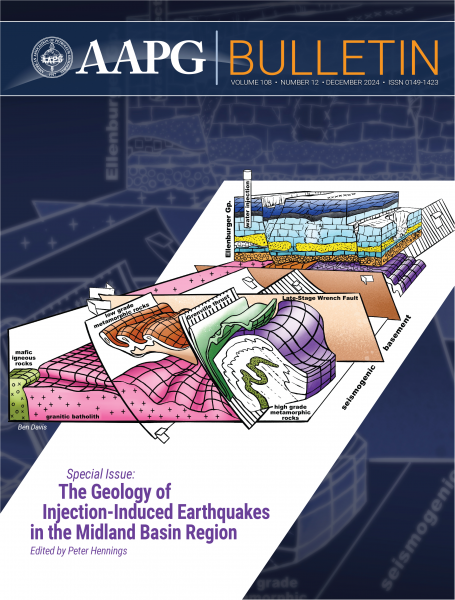 A collection of published papers offers the most detailed and comprehensive breakdown yet of how water injected into the Permian Basin during oil and gas operations is changing subsurface pressures and causing earthquakes.
The Permian Basin in West Texas is the country’s most prolific energy-producing region, accounting for more than 40% of the nation’s oil production and about 15% of gas production. However, energy production has caused earthquakes and other challenges in recent years, as oil and gas operators now manage about 15 million barrels of produced wastewater each day.
This briny water comes to the surface as a by-product of energy production. Most of it is disposed of by being pumped back underground.
The new work is a synthesis of the geology of the Permian Basin, with a particular focus on the Midland Basin, and how its subsurface geology is interacting with injected water over time. In addition to offering a detailed explanation of the issue, the papers include information that oil and gas operators and regulators can use to reduce seismicity and associated hazards.
Research by Research Professor Peter Hennings
Bureau of Economic Geology
Published in December 2024 in AAPG Bulletin