
Texas Schools Teach Carbon Capture
December 13, 2025
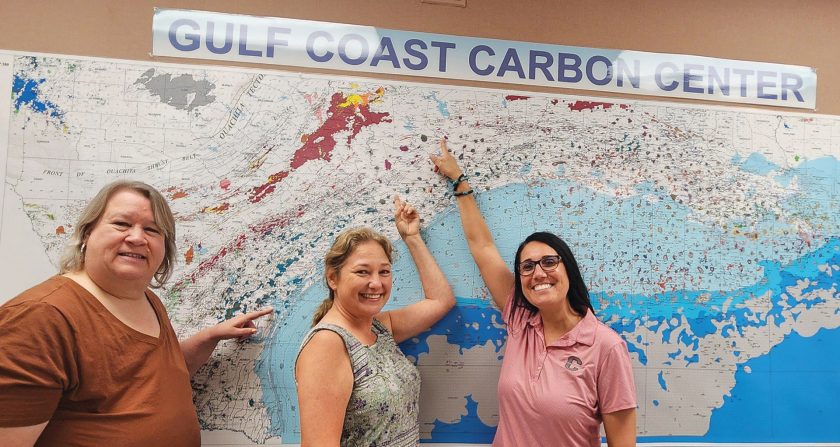
When Cynthia Hopkins returned to her seventh grade science classroom in Corpus Christi last fall, she had a little something extra in her toolkit — ready-made lesson plans and materials to teach her students about carbon emissions and methods of safely trapping them underground.
The lessons aren’t just topical; they’re geographically important for Hopkins’ students at Harold C. Kaffie Middle School. The Gulf Coast is a hot spot for the burgeoning carbon capture and storage (CCS) industry, with more than 50 projects underway or in the planning phase.
CCS is a method of taking greenhouse gases emitted by power plants, industrial facilities or even directly from the air and storing them underground in geological formations that will reliably and securely hold them. The industry is opening new career paths, too.
Hopkins was among the first cohort of Texas science teachers to take special training during the summer offered by the Gulf Coast Carbon Center. The goal was to come up with a K-12 curriculum on carbon capture that is ready-fit for the classroom.
Program by Principal Investigator Sue Hovorka, Gulf Coast Carbon Center
Bureau of Economic Geology
View more information on the program, lesson plans and educational resources
Back to the Newsletter