
Texas Microplastics Being Swept Out to Sea
December 13, 2025
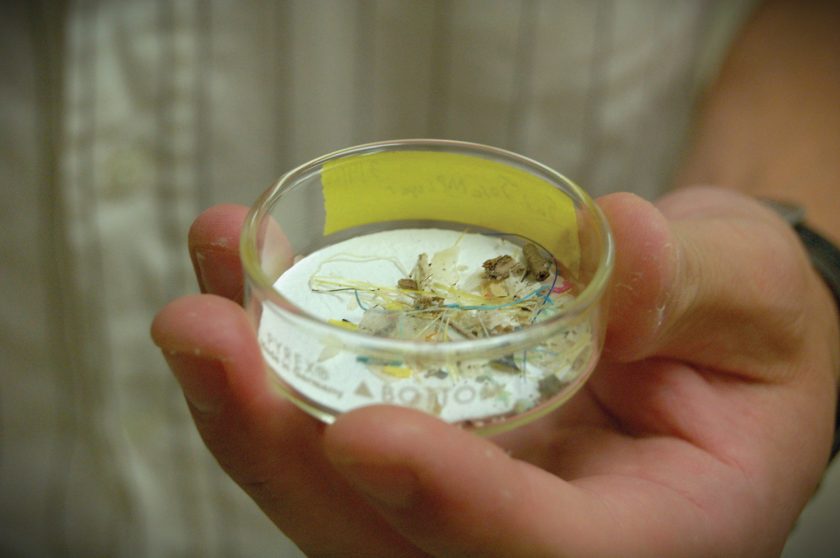
From tiny pellets to creepy wave-battered baby dolls, the Texas coast is a notable hot spot for plastic debris.
But when researchers went searching for microplastics in sediments pulled from the bottom of Matagorda Bay and its surrounding inlets, they didn’t find much.
Most of their samples contained only tens to hundreds of microplastic particles for each kilogram of sediment. This is hundreds to thousands of times less than other bayside environments around the world.
Their findings suggest that rather than settling at the bottom of the bay, microplastics are being swept out to the wider Gulf of Mexico. Once in the open water, the microplastics can absorb chemicals from the surrounding environment and can build up in the bodies of migratory birds, sea life — and eventually humans.
The study marks the first time that researchers have examined the prevalence of microplastics in Texas bay sediments. The results provide important baseline data. They also show that since the bay is not retaining microplastics, more research is needed on where they’re off to next.
The research is part of a new field of geosciences called “environmental sedimentology,” which treats microplastic fragments like sediment grains from rock. Researchers in this field are interested in where the fragments originate, how they travel in the environment, and where they end up.
Research by Doctoral Student William Bailey; Research Associate Professor Cornel Olariu; Professor David Mohrig
Department of Earth and Planetary Sciences
Research published in March 2025 in Environmental Science & Technology
Back to the Newsletter