
New Research Group Tackles Data Center Issues on Texas Electric Grid
December 18, 2025
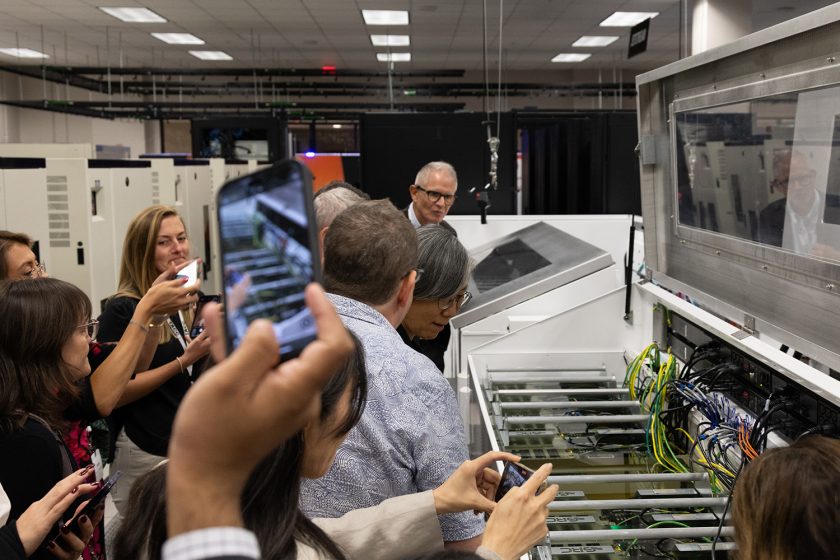
The Jackson School of Geosciences has launched a new research consortium to help Texas capitalize on the influx of data centers coming into the state in a sustainable way.
Data centers are a booming industry across the state. However, the industry’s growth, along with that of other large-load customers, could push peak electricity above what the grid can supply.
The consortium — called Collaborative Optimization & Management of Power Allocation, Surface & Subsurface strategies (COMPASS) — is bringing together industry funders and scientific experts to pursue research. COMPASS is also collaborating with people living in the communities near data centers and large-load projects.
Its goal is to create a strategic development plan to help local communities reap the economic benefits of these growing sectors, while also mitigating negative impacts on the environment and Texas electric grid.
Most recently, researchers published a white paper, “Sustainable Data Center Growth in Texas: Energy, Infrastructure, and Policy Pathways,” that outlines major challenges associated with data centers and large-load development projects. These include energy, land and water use, community engagement and workforce development.
COMPASS is accepting applications from organizations to the consortium. The annual membership fee of $50,000 grants members access to forecasting reports, a web-based interactive visualization and mapping database, policy briefs and recommendations, student research and pilot programs, and research findings before they’re published in peer-reviewed scientific publications.
Research by Program Manager and Chief Economist Ning Lin
Bureau of Economic Geology
For more information, contact Ning Lin at ning.lin@beg.utexas.edu
Back to the Newsletter