
Mantle Activity Set Course for Humanity
December 13, 2025
By bringing together previously published research with new models created at the Jackson School of Geosciences and the GFZ Helmholtz Centre for Geosciences, researchers found that a plume of hot rocks that burst from the Earth’s mantle millions of years ago could be an important part of the story of animal and human evolution.
The story begins 50 million-60 million years ago, when a slab of rock sliding into the Earth’s mantle created a “conveyor belt” for hot rocks to boil up in an underground plume that reached the surface some 30 million years later. This convective activity in the mantle, coupled with the collision of tectonic plates, created an uplift in land that contributed to the closing of the ancient Tethys Sea, splitting it into what is now the Mediterranean and Arabian Seas and creating a landmass that bridged Asia and Africa for the first time about 20 million years ago.
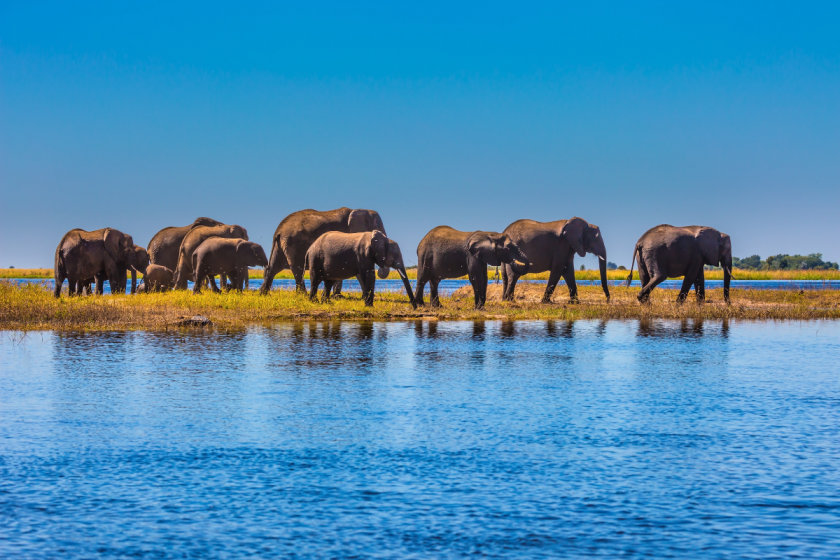
That land bridge connected Asia and Africa through what is now the Arabian Peninsula and Anatolia. This gradual uplift of land enabled the early ancestors of animals such as giraffes, elephants, rhinoceroses, cheetahs, and even humans to roam between Africa and Asia —ending what was a 75 million-year-long isolation of Africa from other continents.
In this case, timing is everything. If it had been an additional million years before Africa and Asia were connected, the animals that made their way into and out of Africa could have been on different evolutionary paths. That includes the ancestors of today’s humans. Several million years before the land bridge had completely closed, the primate ancestors of humans came to Africa from Asia. While those primates ended up going extinct in Asia, their lineages diversified in Africa. Then, when the land bridge fully emerged, these primates re-colonized Asia.
Research by Professor Thorsten Becker
Department of Earth and Planetary Sciences; University of Texas Institute for Geophysics
Published in April 2025 in Nature Reviews Earth & Environment