
Jackson School Professors Lead UNESCO Chair in Open Data, AI, Water, and Cities
December 13, 2025
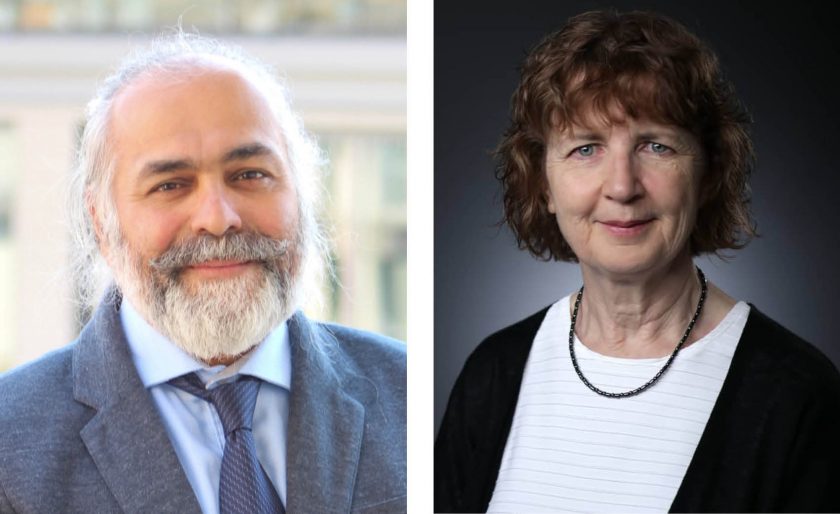
This summer, The University of Texas at Austin was named the UNESCO Chair in AI, Water, and Cities. Leading the chair are Professor Dev Niyogi and Research Professor Bridget Scanlon, who are both faculty members at the Jackson School of Geosciences.
UNESCO is an agency of the United Nations that promotes international cooperation in education, science and culture. The UNESCO chair designation recognizes UT as a resource that can help cities make data-driven decisions to become more resilient to disasters, weather extremes and water scarcity.
“This is really a tremendous honor for UT and the Jackson School,” said Michael Young, associate dean for research at the school. “The UNESCO Chair is an acknowledgement that UT is part of the global community and can help foster collaborative partnerships for using AI and data to build back better, develop future economies, and increase the resilience of cities to the risks of natural hazards and extremes.”
Scanlon is the program director of the Sustainable Water Resources Program at the Jackson School’s Bureau of Economic Geology and is a leading authority in water resources. Her research involves using remote sensing, global and regional models, and ground-based monitoring data to advance research that can help policymakers and water managers make informed decisions.
Niyogi is the principal investigator of the University of Texas Extreme weather and Urban Sustainability “TExUS” Lab; and co-lead for the UT-City CoLab, an initiative between UT and the City of Austin to prepare for and address climate change and its urban impacts. His research focuses on understanding and mitigation of extreme weather hazards, such as heavy rains, hurricanes and extreme heat.
A priority for the UNESCO team is building AI tools and open datasets and sharing the knowledge and best practices that they have developed as part of the UT-City CoLab.
Globally, there are about 1,000 UNESCO Chairs. This is the third for the state of Texas and the second for UT. A research team at the Moody College of Communication is a UNESCO Chair in Communication.
Back to the Newsletter