
Declining Aerosols Could Increase Heatwaves
December 13, 2025
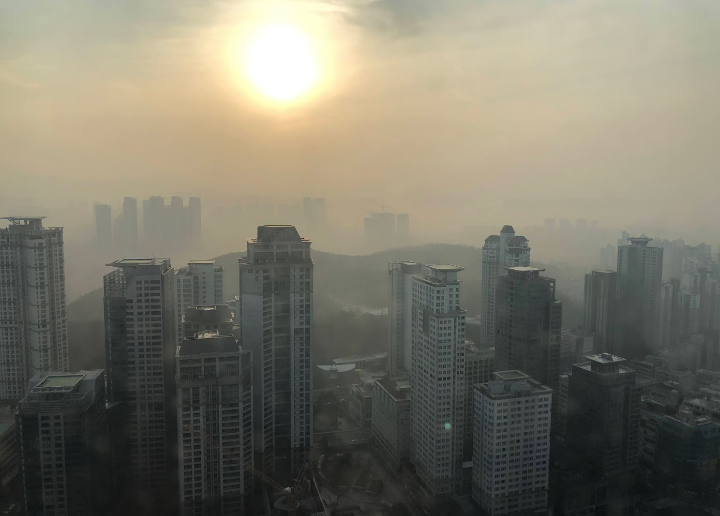
Heatwaves are becoming more frequent around the world. And while rising temperatures caused by greenhouse gas emissions are part of the problem, the declining levels of aerosols — the small particles that make up smog and air pollution — may be driving the rise even more. This is particularly true in populated areas.
Using global climate models, researchers found that aerosols are up to 2.5 times as influential as greenhouse gases at driving changes in heatwave occurrence in populated areas — with higher levels of aerosols suppressing heatwaves by reflecting the sun’s rays.
The researchers found that from 1920 to the present, higher aerosol levels helped suppress the occurrence of heatwaves in populated areas by about half. This trend is now reversing because of declining aerosol levels due in part to clean air policies.
If global aerosol emissions continue to decline as anticipated during the coming decades, heatwaves are expected to go from today’s global average of about 40 days per year to about 110 days per year by 2080. The regions that are projected to be hit particularly hard include Sub-Saharan Africa, South Asia, South America and Western Europe.
Research by Assistant Professor Geeta Persad
Department of Earth and Planetary Sciences
Research published in July 2025 in Environmental Research Letters
Back to the Newsletter