
Asteroid Impact Spurred Life’s Recovery
December 13, 2025
About 66 million years ago, an asteroid slammed into the planet, wiping out all nonavian dinosaurs and about 70% of marine species.
But the crater it left behind in the Gulf of Mexico was a literal hotbed for life, enriching the overlying ocean for at least 700,000 years, according to scientists. They discovered that a hydrothermal system created by the asteroid impact may have helped marine life flourish at the impact site by generating and circulating nutrients.
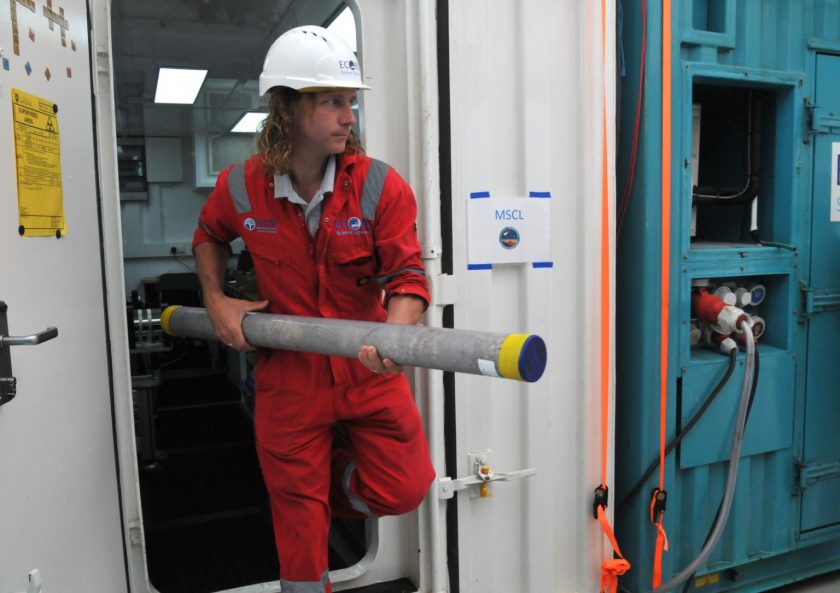
The research hinges on the chemical element osmium, which is associated with asteroid material. By analyzing core samples of the crater’s sediments, the researchers found evidence that osmium from the buried asteroid was being continuously released into the Gulf of Mexico by submarine hydrothermal activity.
They found that while the hydrothermal system was releasing this osmium, the plankton in the area were a type that is associated with high-nutrient environments. When the osmium returned to pre-impact levels, the plankton were associated with low-nutrient environments, indicating that the ecosystem was no longer being sustained by nutrients from the hydrothermal system.
Research by Research Professor Sean Gulick; Research Assistant Professor Chris Lowery
University of Texas Institute for Geophysics; Department of Earth and Planetary Sciences
Research published April 2025 in Nature Communications
Back to the Newsletter