
Algorithm Raises Questions About Cascadia Earthquake Record
December 17, 2025
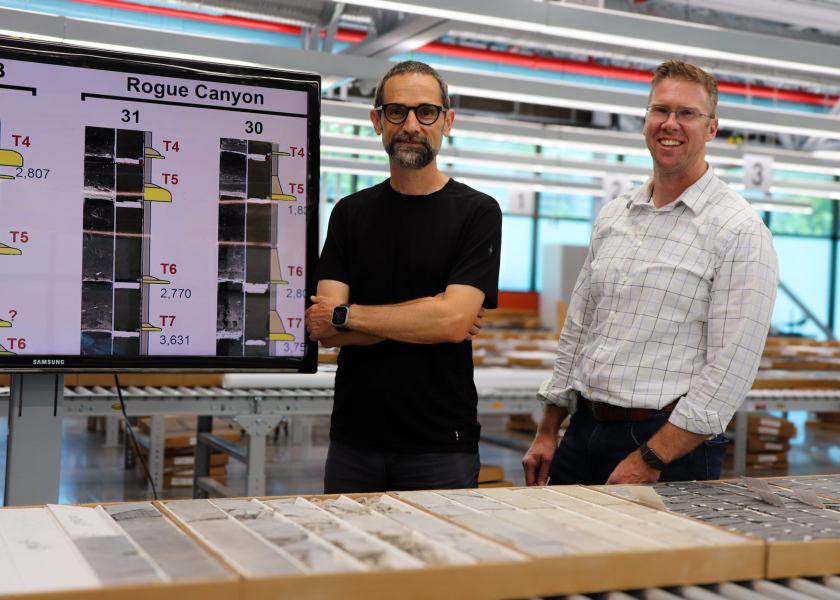
The Cascadia subduction zone in the Pacific Northwest has a history of producing powerful and destructive earthquakes that have sunk forests and spawned tsunamis that reached the shores of Japan.
Figuring out the frequency of earthquakes — and when the next “big one” will happen — is an active scientific question that involves looking for signs of past earthquakes in the geologic record.
However, new research is calling into question the reliability of one earthquake record — a type of geologic deposit called a turbidite that’s found in the strata of the seafloor.
The researchers analyzed a selection of turbidite layers from the Cascadia subduction zone dating back to about 12,000 years ago with an algorithm that assessed how well turbidite layers correlated with one another.
They found that in most cases, the correlation between them was no better than random. Since turbidites can be caused by a variety of phenomena, and not just earthquakes, the results suggest that the turbidite record’s connection to past earthquakes is more uncertain than previously thought.
The results don’t necessarily change the estimated earthquake frequency in Cascadia, which is about every 500 years. However, they do highlight the need for more research.
Research by Research Professors Jacob Covault and Zoltán Sylvester
Bureau of Economic Geology; Department of Earth and Planetary Sciences
Published in June 2024 in GSA Bulletin