
Professor David Mohrig Retires After 20 Years at the Jackson School
He Leaves a Legacy of Students, Sediment Experiments and Colorful Shirts
On Aug. 15, Professor David Mohrig retired from the Department of Earth and Planetary Sciences, capping off a 20-year career as a lauded and beloved scholar, educator, mentor and administrator at The University of Texas at Austin.
Mohrig, now a professor emeritus, leaves behind a celebrated academic legacy, both in terms of his professional success and the profound scientific impact on his students and colleagues, and in the ground-breaking research he has conducted. Mohrig is a geomorphologist and sedimentologist renowned for his innovative work studying the transport of sediment across the Earth — both in real time and millions of years ago — and how these processes shape landscapes on the surface, under the ocean and on other planets. He’s been recognized for his accomplishments with the 2019 Francis J. Pettijohn Medal for Sedimentology, an honor from the Society for Sedimentary Geology that recognizes outstanding contributions in the field. And his sustained contributions to geomorphology were recognized by the 2021 G.K. Gilbert Award in Surface Processes from the American Geophysical Union.
But around campus, Mohrig’s legacy is in his easy smile and nod in the hallways, approachability in the classroom, kindness in the field, and of course, his wardrobe of colorful, patterned shirts. (They’re not Hawaiian shirts, Mohrig will tell you, although you could forgive an untrained eye for the mistake.)
Mohrig is also known for his indefatigable service record, having participated in a seemingly endless list of committees over his career, both for the Jackson School of Geosciences and outside organizations.
As Department Chair Peter Flemings quipped in the introduction to Mohrig’s final DeFord Lecture in April, “Not everyone is perfect. His service record is somewhat lacking.” The packed audience in Boyd Auditorium roared with laughter.
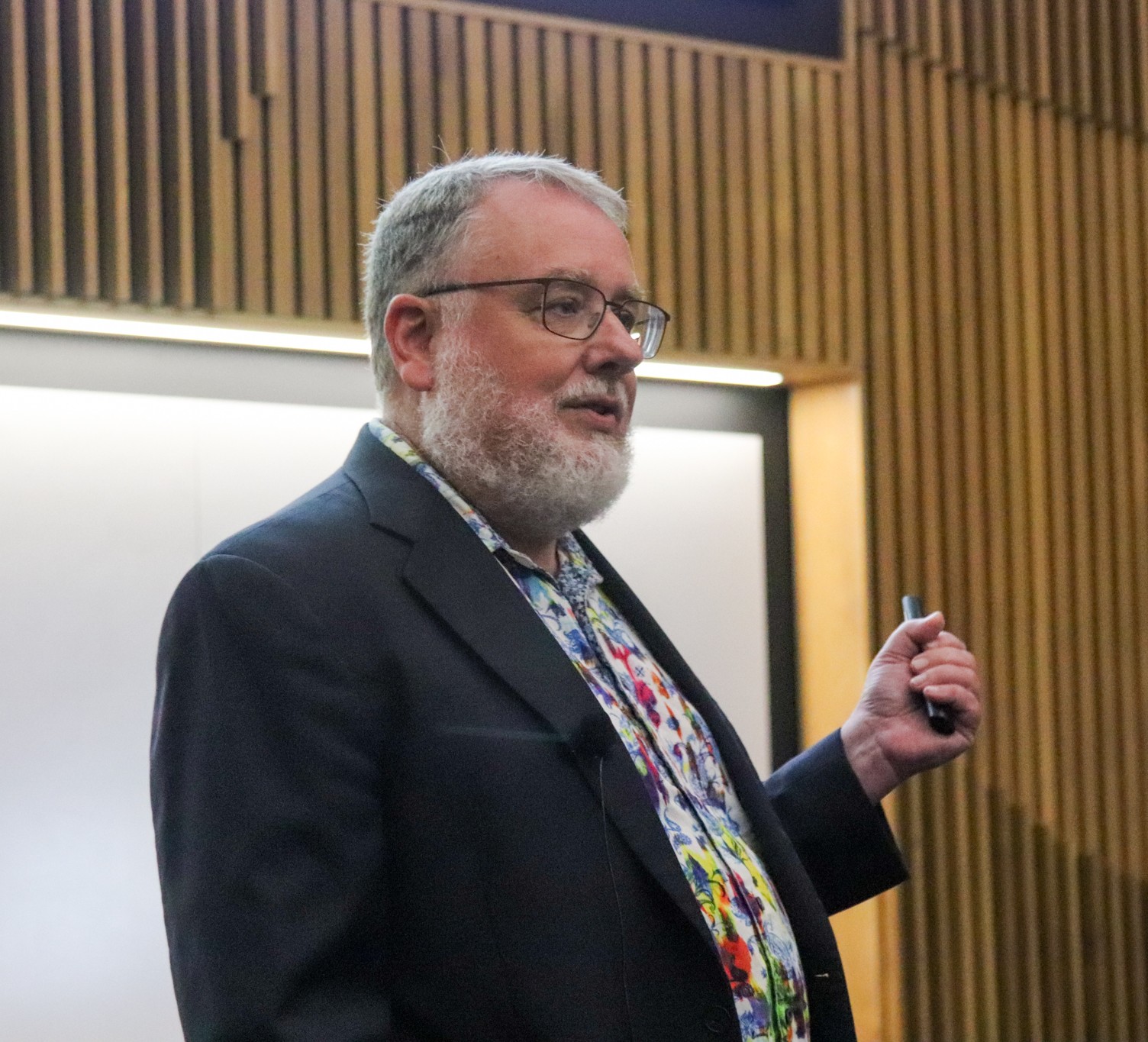
But out of all his duties and accomplishments, Mohrig said that it’s teaching, whether that’s in the classroom or training students one-on-one, that he will miss the most after retirement.
“You can’t understand my career without realizing that there was this really important fuel that was provided through teaching and educating,” he said.
Kyle Straub, professor and chair of the Department of Earth and Environmental Sciences at Tulane University, was one of Mohrig’s first doctoral students during his first faculty appointment at the Massachusetts Institute of Technology in the early 2000s. Mohrig has advised 51 doctoral students, master’s students and postdocs over his years of teaching at both MIT and UT, many of whom have gone on to become professors themselves. Straub said Mohrig served as the perfect professorial role model.
“A huge reason I decided to go into academia is because I wanted in my own small way to give back to students in the way he did to me,” Straub said.
Faculty members’ jobs are made up of two distinct components — they are expected to be prolific researchers who make impactful scientific discoveries. They’re also expected to be inspiring teachers to undergraduates at the most introductory level and insightful mentors to graduate students. Mohrig is the gifted individual who excels in each of these roles, Straub said.
He has witnessed how adept Mohrig is in advising students through their research projects. Mohrig guides them to ask their own questions. And whatever question they ask, he’ll respond, “That’s brilliant!” — whether it’s brilliant or not, Straub laughed.
“But you have an ability, then, to find out on your own, with him being there, offering bowling bumpers to put you back on track,” Straub said. “That allows you an ability to come up with your own ideas, feel ownership of your project, and find out whether it’s good or not. And if it’s not, that’s fine. He’s there to support you with the next idea that you come up with, in which he’ll tell you, ‘That’s brilliant!’”
Jackson School Dean Danny Stockli said he has never known anybody who cares as much about others’ success or is as selfless as Mohrig.
“His passion for science is contagious, and his humility and dedication something we all aspire to. As a scientist, colleague, and friend, I have always viewed David as my compass and a voice of reason,” Stockli said.
Teaching and research can be complementary endeavors — especially with graduate students. Mohrig said both he and his students have enjoyed studying, for example, how diverting the Brazos River changed the landscape, leading to some unintended consequences such as plugging the San Bernard River mouth with sand.
“It’s like catnip to them as much as it is to me. So they get excited about it, and it’s easy for me to get excited about it,” he said.
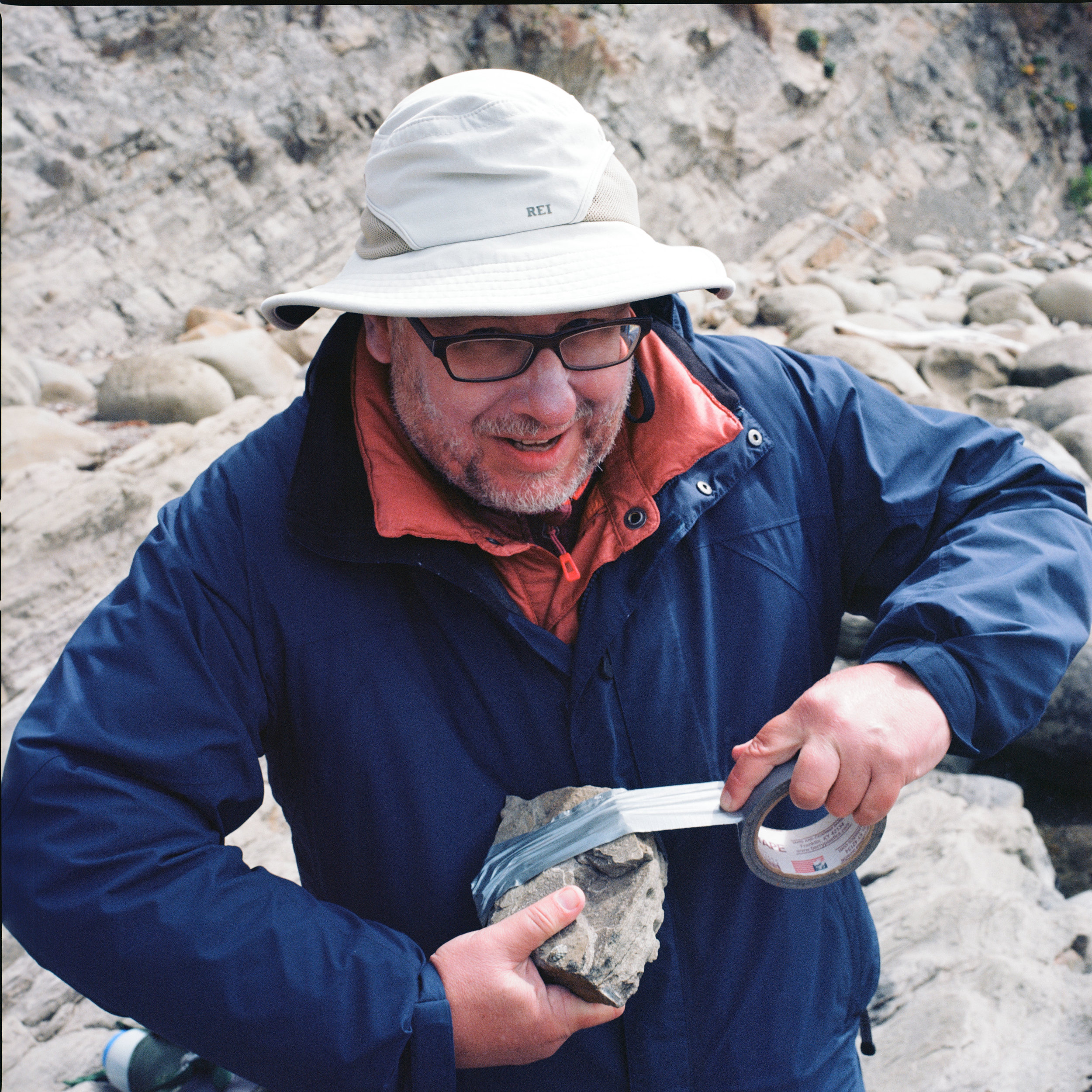
Mohrig is the quintessential geologist who got a rock hammer for Christmas as a kid. But he really got interested in pursuing the geosciences during an introductory geology course his freshman year at Pomona College in California. This proved to be an important time in his life for a few other reasons, too: Pomona is where he met his future wife, Chiu-Mi Lai, who also just retired from UT. (She was a professor of instruction in the Department of Asian Studies.) And it’s where he got his first taste of academic administration; he was class president.
Mohrig went on to get both his master’s degree and doctoral degree from the University of Washington. He worked as a senior research geologist at Exxon for five years and as an assistant professor at MIT before coming to the Jackson School in 2006, right after it had formed as its own school.
Professor Emeritus Charlie Kerans arrived at the department only a year before Mohrig. They were office neighbors on the third floor of the Jackson School building, and both sedimentologists. They quickly became research collaborators and friends, and before long they were leading field trips together — to the Guadalupe Mountains, White Sands National Park, Ghost Ranch and the Sacramento Mountains in New Mexico. The duo fell into a pattern while leading students on these hikes: Kerans would set a speedy clip at the front of the group, and Mohrig would be at the back making sure no one fell behind.
“He was really supportive on hikes. Usually, I would be hiking off in the distance somewhere, and David would make sure everybody came back alive,” Kerans said.
This encapsulates who Mohrig is, Kerans said. Not only in the field, but in everything he does, Mohrig is approachable, unassuming, fair and encouraging. Students feel comfortable asking him questions and getting his input.
“That’s the way he is with everybody, but it was very distinct out in the field, because students are usually somewhat uncertain early on — they hadn’t done something like that before,” Kerans said. “It was nice having that tenor for the whole group. He would set that tenor.”
One of Mohrig’s most trusted and longtime research collaborators is research scientists Jim Buttles. They worked together on large-scale sedimentation experiments at MIT, and when Mohrig came to UT, he invited Buttles to join.
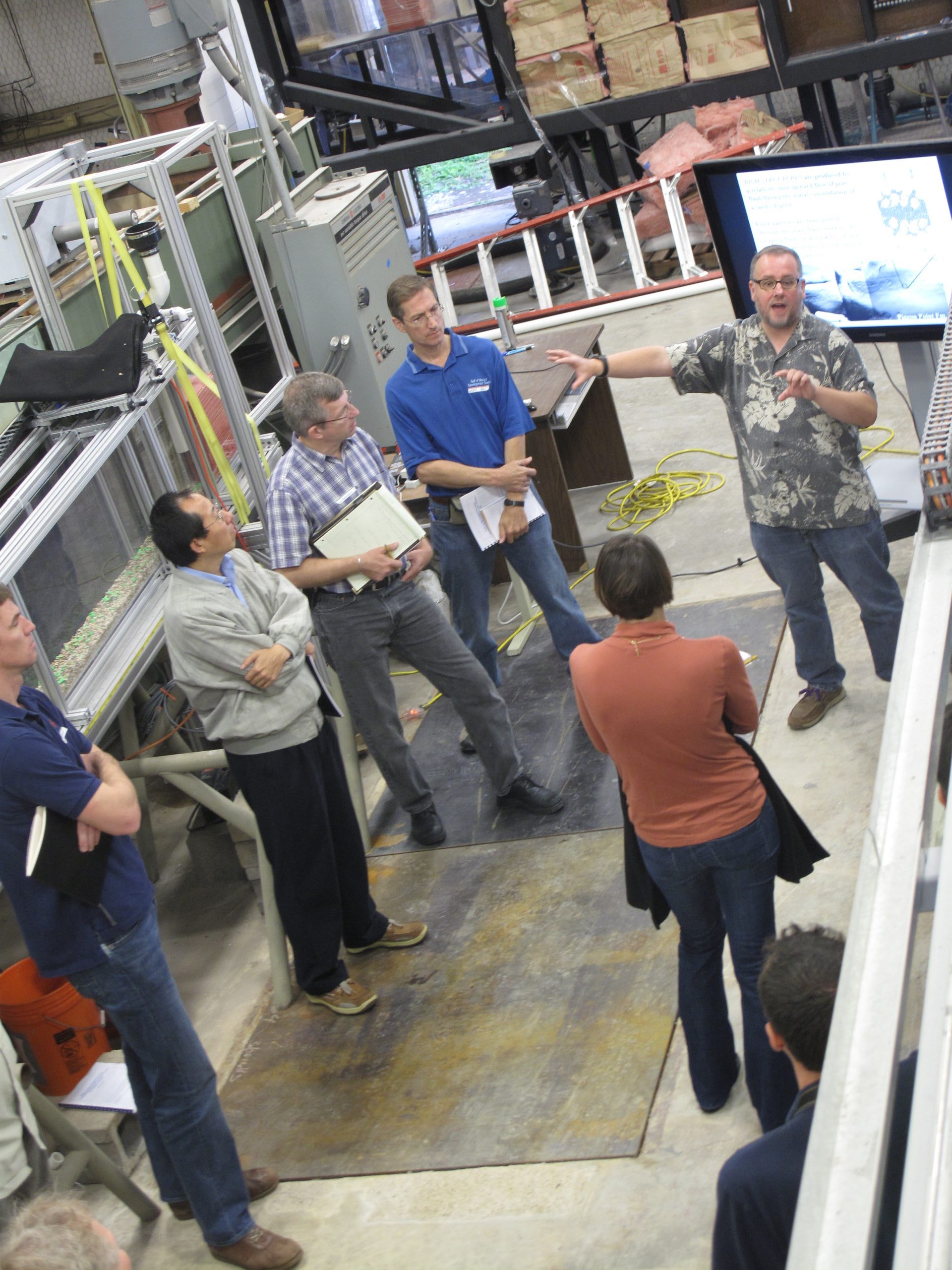
Together they designed and commissioned an enormous tank to simulate sediment flow at the Center for Water in the Environment Laboratory at UT’s J.J. Pickle Research Campus. It’s essentially an indoor above-ground pool with a moat, which allowed them to create an infinite basin of sorts that simulates an ocean environment. Buttles estimates that over the last 20 years they have run thousands of experiments in this tank.
Mohrig and Buttles also ran the Jackson School’s flume lab and wind tunnel together. All of these lab facilities were fertile testing grounds for experiment-based research, in which Mohrig excels, and have proven to be highly accurate simulations for the movement of solids in various environments.
This was all unique work — no one had run these types of experiments before, Buttles said. This novel form of simulating sedimentation, coupled with Mohrig’s intuition and creative problem solving, made their research valuable to the private sector and fellow academics alike.
Mohrig is renowned for his early research on deep water sedimentation. But when he came to UT, he became very interested in understanding how land is built in coastal areas. In the aftermath of Hurricane Katrina, he and his students studied if it would be possible to redirect the Mississippi River in order to build new land that could minimize or reduce storm surge from hurricanes.
He spent years working on deltaic systems, and did a lot of research studying sediment transport under water on the ocean floor. Mohrig also studies different types of flow patterns, and has continued his work on coastal rivers.
For Mohrig, sediment transport through channels is a fascinating subject because it’s not only about how solids or fluids move over a surface; it’s about how the surface evolves in the process, and how that surface evolution affects what’s moving across it.
“It’s a system with very, very strong feedbacks. And those feedbacks are not linear, so it makes for very interesting connections,” he said.
When Mohrig became the associate dean for research (ADR) at the Jackson School in 2018, he pivoted his research to focus on smaller, closer river systems like the Trinity in east Texas, so he could keep up his research while also serving the school. The ADR helps advocate for and advance research across the Jackson School. Mohrig took this role seriously.
He said that one of his proudest accomplishments in the position, which he held until 2023, was bringing the Jackson School’s White Family Outdoor Learning Center into UT’s larger Texas Field Station Network, which connects Jackson School students and researchers to UT’s field sites across the state.
“It’s a great resource for education, for just understanding the Texas system, period,” he said.
And when the COVID-19 pandemic struck when he was at the helm, Mohrig worked tirelessly to allow research to continue, not just for science’s sake, but so students and researchers could continue to be employed and get paid.
Even in this role, Mohrig made time for teaching. During his appointment he, Professor Chris Bell and Professor of Practice Mary Poteet started an introductory course that took students out into the field every Friday. Mohrig said that it was the part of his week that he looked forward to the most.
“It was great going out and looking at how that little part of the Earth’s surface system worked with those first-year students,” he said.
One of the perks of academic geology is the dress code. In general, you can wear what you want.
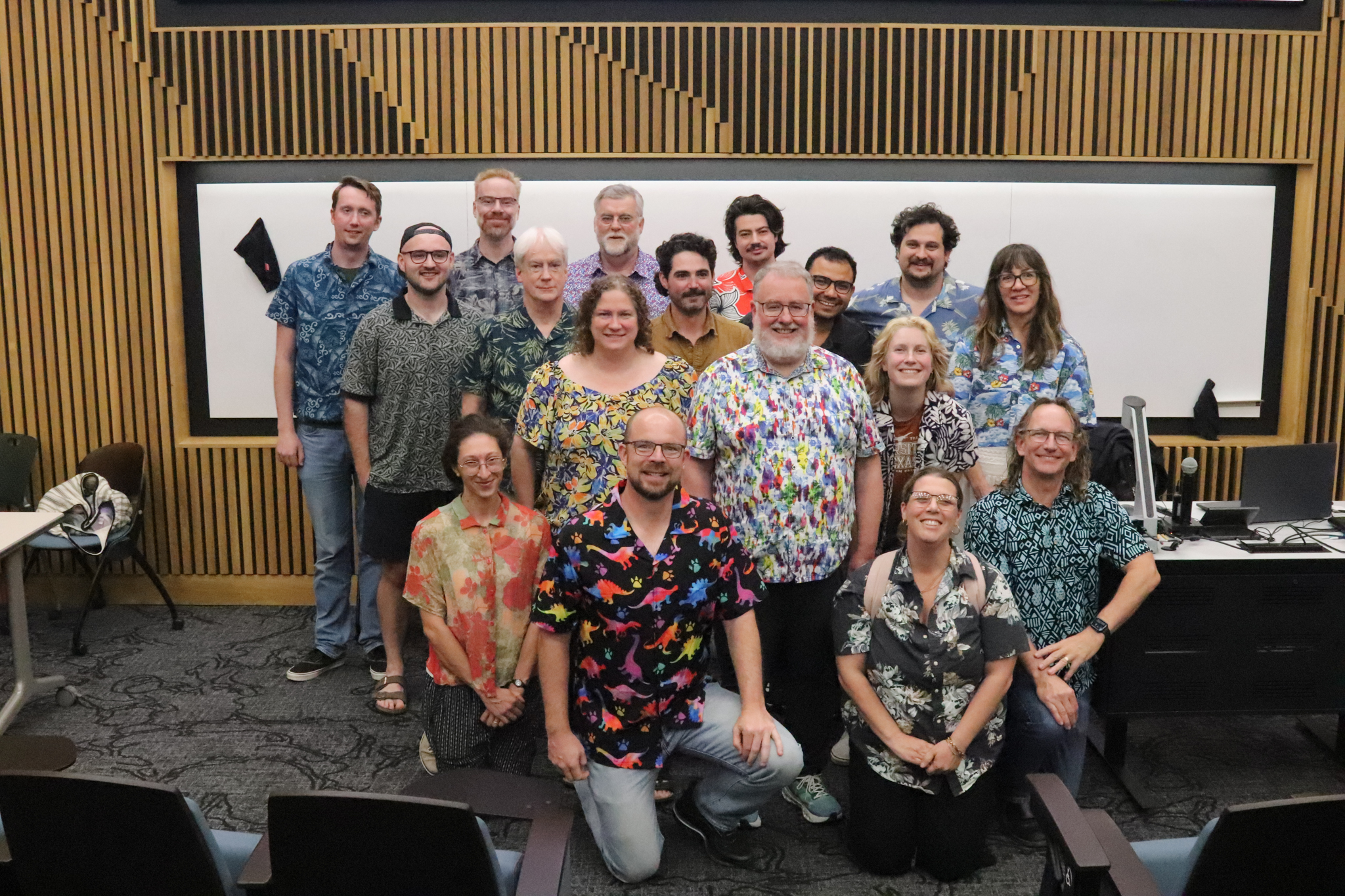
Mohrig’s preference for colorful button-down shirts started shortly after he arrived at the Jackson School. This was in part because Mohrig likes bright colors. But it was also a response to his years spent working in an industry where the expectation was to wear basic white or blue Oxford shirts. He just didn’t want to do that anymore. Over the last 20 years, he has almost exclusively worn brightly colored short-sleeve button-downs.
To Mohrig’s surprise, his sartorial choices actually ended up being a valuable pedagogical tool.
“There’s no doubt that the brightly colored shirts make you seem more approachable,” he said. “And that’s something you want as an educator: you want everyone to feel that you’re approachable.”
Crucially, though, the person wearing the shirts is kind and caring. Buttles believes that Mohrig’s genuine kindness has kept his long list of collaborators and former students close.
“I’ve been able to see it through everybody that he’s worked with, and even with me,” he said.
A testament to this quality is Mohrig’s last field trip as a full-time faculty member. The week before his retirement, 26 of Mohrig’s former students and postdocs gathered at the field site where he did the bulk of the work for his dissertation — the Loup Rivers in Nebraska. They spent the week catching up with each other, collecting data and talking science. After all, Earth science, Mohrig admits, is his hobby as well as his career.
“David’s not going to retire,” Buttles said. “I don’t care what he says. He just — he really loves science.”
Mohrig’s plans to spend his retirement spending more time with his wife, working on metal kinetic art pieces, and, yes, there will be a little more research too.
The University of Texas at Austin
Web Privacy | Web Accessibility Policy | Adobe Reader