

One Professor. One Year. One Hundred Hydrogeology Lectures.
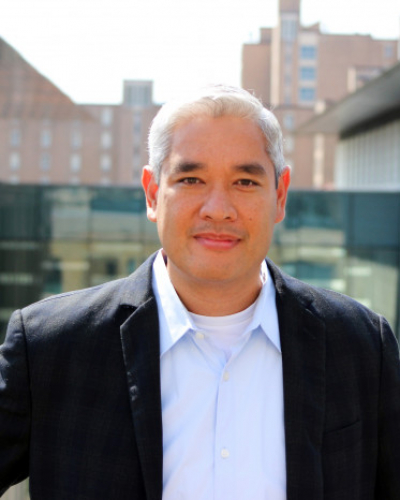
As Jackson School of Geosciences Professor Bayani Cardenas began to plan the stops for his year-long world tour, he knew one thing — he was not going to do this half-heartedly. Now, after spending all of last year traveling to university campuses, high schools, laboratories and government offices to share insights from his hydrogeology research, Cardenas can look back on more than 100 talks in over 70 cities.
Mission accomplished.
Cardenas has been a hydrogeology professor at the Jackson School for almost 20 years. His lecturing usually takes place on The University of Texas at Austin campus in the JGB building, or in field sites during the school’s summer hydrogeology field camp. But last year, Cardenas taught to the wider world as the Geological Society of America’s 2025 Birdsall-Dreiss and LaMoreaux International Distinguished Lecturer.
This prestigious award recognizes excellence in hydrogeology research; its recipients are selected by past winners based solely on their research reputation and communication skills. Awardees aren’t simply given a prize. They go on tour — visiting universities and institutions around North America and internationally — to speak about the science of water and how it interacts with the environment.
“Bayani is world-class hydrogeologist and geoscience communicator, and I’m so pleased that thousands of students and researchers all over the world got to experience his magic firsthand,” said Danny Stockli, interim dean of the Jackson School. “Being the Birdsall-Dreiss lecturer is a tremendous honor, but also a testament to our school’s excellence and global reach. Thus, supporting his teaching leave and travel was a no-brainer and highly impactful investment.”
Most professors who are selected for this reputable lecture tour give 40-50 talks over the course of the year — and usually they have two to three lecture topics that the host institution can choose from. Cardenas, meanwhile, gave 102 talks in 2025, and had nine lecture topics, ranging from the renewability of groundwater to land-ocean connectivity in Arctic lagoons.
Cardenas’ Lecture Topics
- Hydrobiogeochemistry of terrestrial-aquatic interfaces from pore to continental scales
- How a river’s periodic pulse affects its liver: hyporheic zones in the Anthropocene
- Tidal and seasonal groundwater-surface water mixing zones: hot or cold spots for arsenic contamination?
- Groundwater on ice: hydrogeology and the fate of permafrost carbon in Arctic watersheds
- Land-ocean connectivity in Arctic lagoons due to groundwater
- Ridge to reef volcanic hydrogeology: submarine groundwater in the world’s most biodiverse coasts
- Devastation of a sole source coastal aquifer from the most powerful storm ever
- Insights on groundwater renewability from age and residence time analysis
- Beyond Darcy and Fick – Micro-scale insights on nonlinear continuum flow and transport
“I get bored easily — I just work on a bunch of things,” Cardenas said. “And if I ended up choosing one, two, or three talks, I would feel like I was picking favorite grad students. Because I’ve had generations of students working on different topics.”
When Cardenas was chosen, he began to reach out to his friends and colleagues in the hydrology world to see if their institutions would be interested in hosting him. Before he knew it, he had dozens of lectures on the books. He then made a concerted effort to reach out to institutions with fewer resources, and quickly hit 90.
On Jan. 10, 2025 he made his first tour stop — to a high school in a rural part of his native Philippines. His last stop was on Dec. 12 at the University of Iowa.
Among the new experiences, Cardenas got to reconnect with familiar faces and places. He was hosted by many of his former doctoral students, and even got to meet some of their doctoral students — his academic grandchildren, as he calls them. He also visited all three of the universities where he was educated and trained: The University of the Philippines Diliman, the University of Nebraska–Lincoln, and the New Mexico Institute of Mining and Technology.
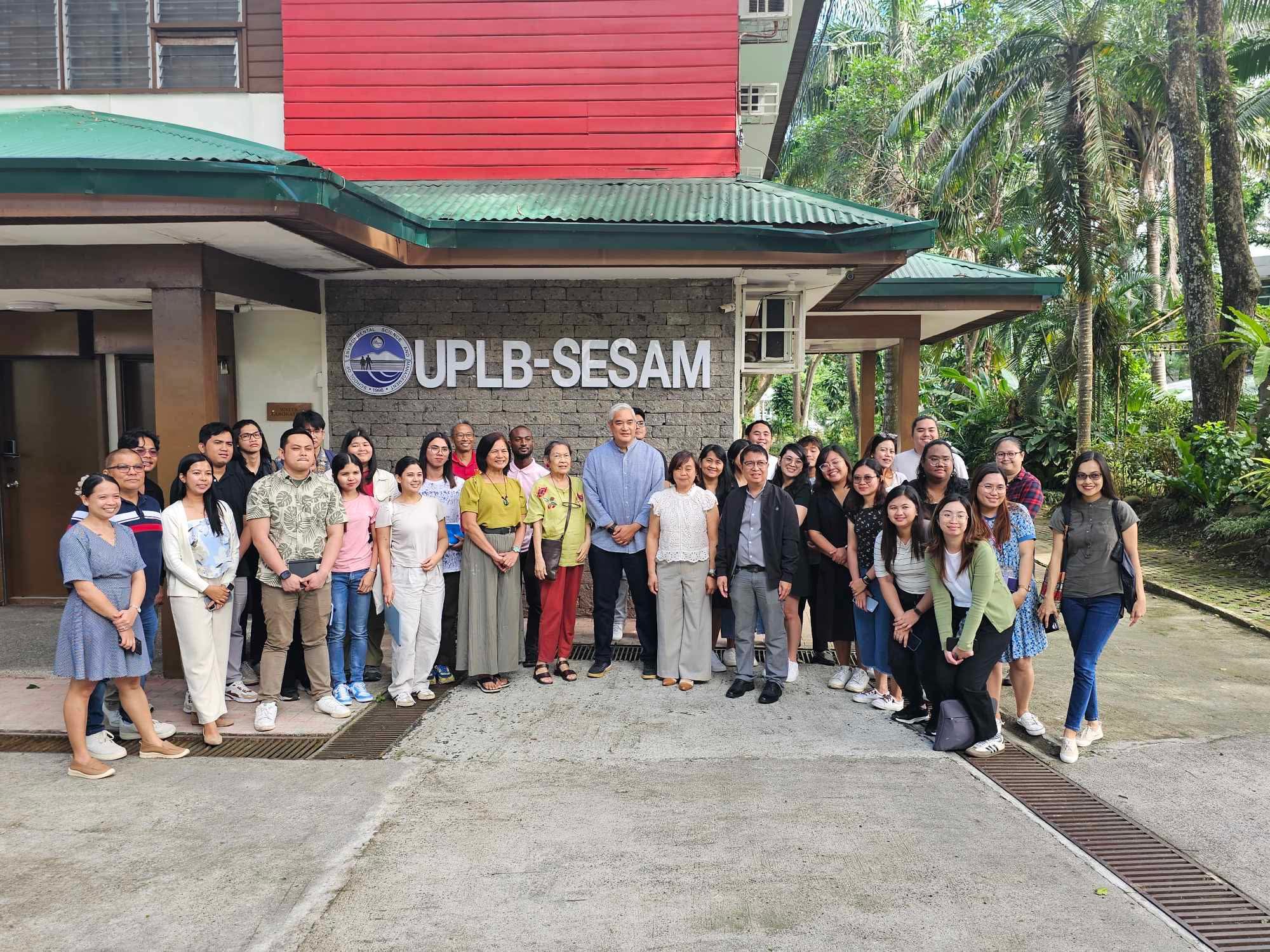
He also spoke at the environmental science department that his late father Marlito Cardenas helped establish at the University of the Philippines Los Baños in the 1980s. Now called the School of Environmental Science and Management, it was the first environmental science department at a university in the Philippines.
This experience also made Cardenas reflect on the significance of representing the field of hydrology as a Filipino. As a graduate student, he remembers going to huge conferences with thousands of people, and not seeing another Filipino person.
As the 2025 Birdsall-Dreiss Lecturer, he got to share his research. But in doing so, he also got to serve as a role model to the students and researchers he spoke to.
“I’m probably the first Filipino geologist and hydrologist they’ve seen,” Cardenas said. “And that’s part of what made it important for me too. I’m representing more than myself.”
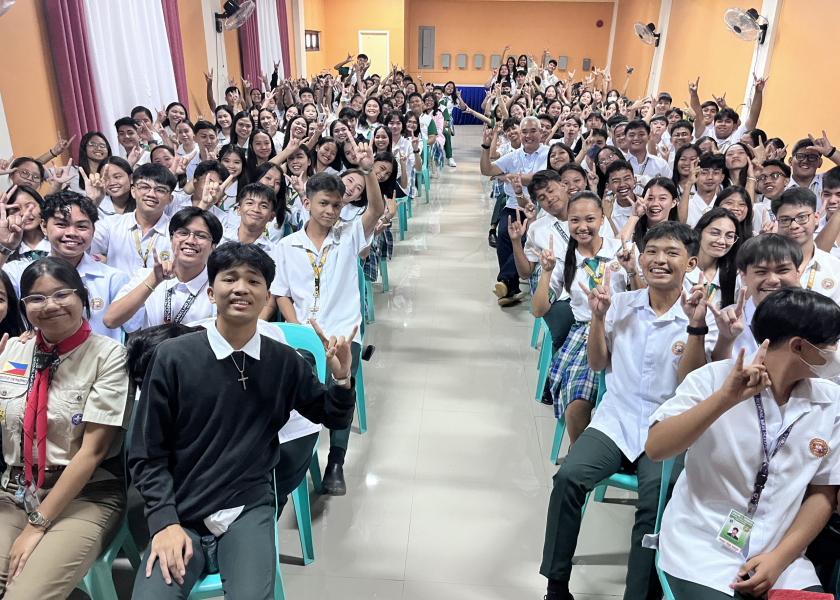
Cardenas’ said that the favorite place he lectured wasn’t a big university or national lab, but a high school in a rural area of the Philippines — the first stop on his tour. The building had no air conditioning, but the breeze flowed through the open wooden windows. He gave the talk in the language he and the students share: Tagalog. It was a hit.
“They also had career questions, like, ‘How did you become a scientist?’ ‘How did you succeed coming from the Philippines?’ So that was just special,” Cardenas said. “And sadly, that was one of my first talks. As soon as I gave it, I was like, ‘No one can top this.’ I knew already.”
The University of Texas at Austin
Web Privacy | Web Accessibility Policy | Adobe Reader