

Awards & Honors

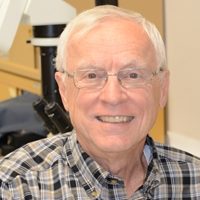
Bureau of Economic Geology Research Professor Bob Loucks was awarded the Doris Malkin Curtis Medal, the highest honor of the Gulf Coast Section of the Society for Sedimentary Geology. Loucks’ areas o expertise include carbonate geology, reservoir characterization and pore network analysis. The medal recognizes his exceptional research contributions, which include publishing over 200 papers and advising dozens of students.

Department of Earth and Planetary Sciences Associate Professor Rowan Martindale received the 2025 Outstanding Contributions in Geobiosciences Award — Post-Tenure from the Geological Society of America’s Geobiology & Geomicrobiology Division. The award honors excellence in research, mentoring, service, and leadership for the geobiology and geomicrobiology community. Martindale’s research focuses on Mesozoic and Cenozoic ocean ecosystems and the evolutionary and environmental events that shaped them.

The Geological Society of America (GSA) has selected Associate Dean for Research Michael Young as the 2025 Michael T. Halbouty Distinguished Lecturer. Awardees are selected on the basis of career accomplishments and reputation. Young will present his lecture at the annual meeting of the GSA in October, focusing on the all‑in costs of expanding and running an electrical grid for Texas.

Geeta Persad, an assistant professor at the Department of Earth and Planetary Sciences, has received a prestigious Faculty Early Career Development Program (CAREER) award from the National Science Foundation. The award recognizes early-career faculty who have the potential to serve as academic role models in research and education. Persad will use the award money to study how smog-producing aerosol pollutants contribute to climate risks such as extreme heat, rainfall and humidity.
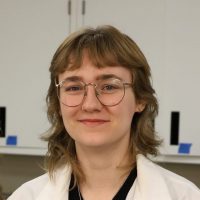
Danielle Zaleski (B.S. 2025) was The University of Texas at Austin President’s Student Employee of the Year in 2025. Zaleski, now a graduate student, was recognized for excellence as a student researcher, working with Jackson School scientists to study the buildup of microplastics in local lakes. Zaleski has developed new lab techniques that improve the analysis of lake core samples and delivered valuable findings on the connection between urban growth and microplastics.
The University of Texas at Austin
Web Privacy | Web Accessibility Policy | Adobe Reader