

Teaching in the Andes Mountains of Argentina
By Brian Horton, professor
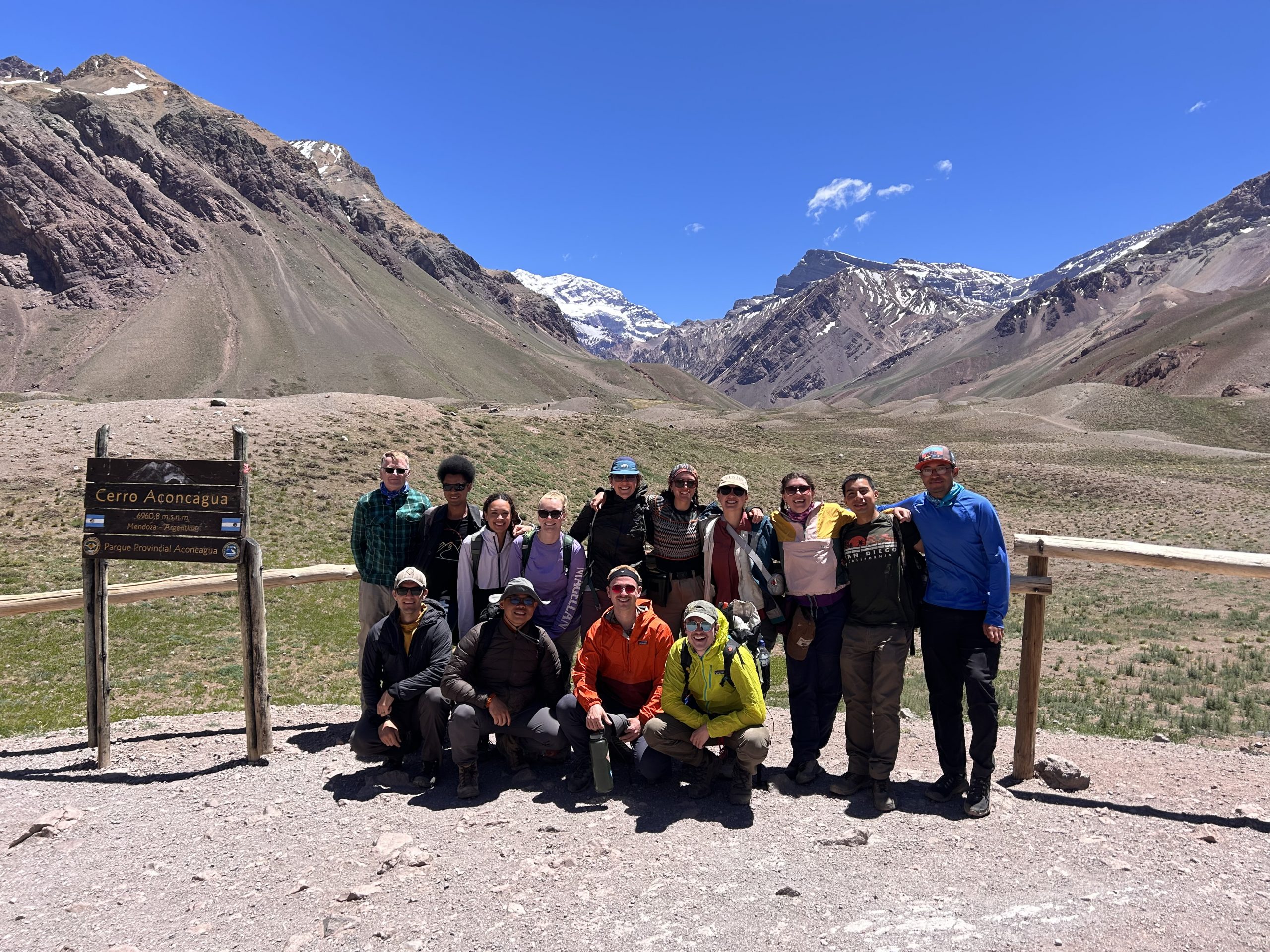
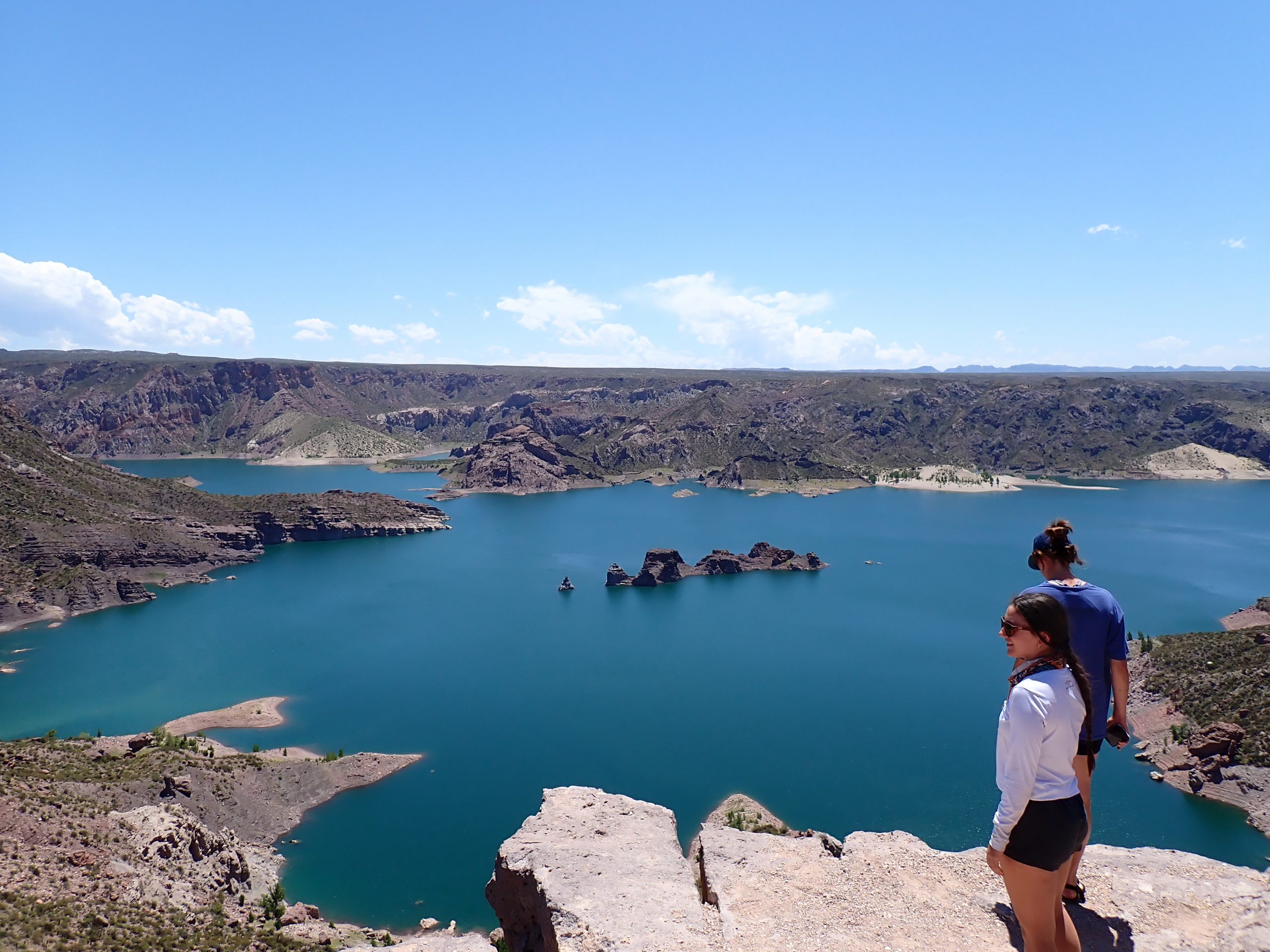
A November 2024 field trip to Argentina explored new ideas on the generation of the Andes Mountains. The 10-day trip investigated connections among Andean uplift, surface erosion, and sediment accumulation in adjacent basins of the Mendoza and San Juan provinces of western Argentina.
Students studied marine and nonmarine clastic deposits of the Neuquen foreland basin and brittle structures of the Precordillera fold-thrust belt to assess the role of flat-slab subduction, orogenic cyclicity, and arc magmatism in generating a complex stratigraphic record punctuated by regional unconformities. Lively discussions focused on the additional effects of climate, sea level, and tectonic inheritance. Integration of sediment provenance and thermochronological results with surface and subsurface data provided critical thinking exercises and a real-world perspective that students will carry forward into their geoscience careers.
The trip was the culmination of a semester-long “hybrid” course (GEO 383U: “Dynamic Field Stratigraphy”) that incorporated lectures by Professor Brian Horton alternating with student-led presentations and critical discussions of the latest research on the sedimentary geology and tectonics of the Andes. Assistant Professor Matt Malkowski joined the class meetings and the field trip, which ended with an exceptional Thanksgiving dinner. Feedback from the students underscored their enthusiasm for the course format and the field experience:
-
“This was the best class I have ever taken. I have never learned more in such a short period of time. I think the presentations along with the field trip were engaging and really allows for critical thinking.”
-
“Having a mix of lectures and student presentations was super helpful. I learned more during our 10-day field trip than I could have learned in an entire year’s worth of class.”
-
“Everything about the course helped me to learn. Presenting on papers and listening to other students present are great ways to learn complex topics. And getting out into the field is a great way to put together a lot of the topics covered in the class.”
The University of Texas at Austin
Web Privacy | Web Accessibility Policy | Adobe Reader