
C H A N G E
A G E N T
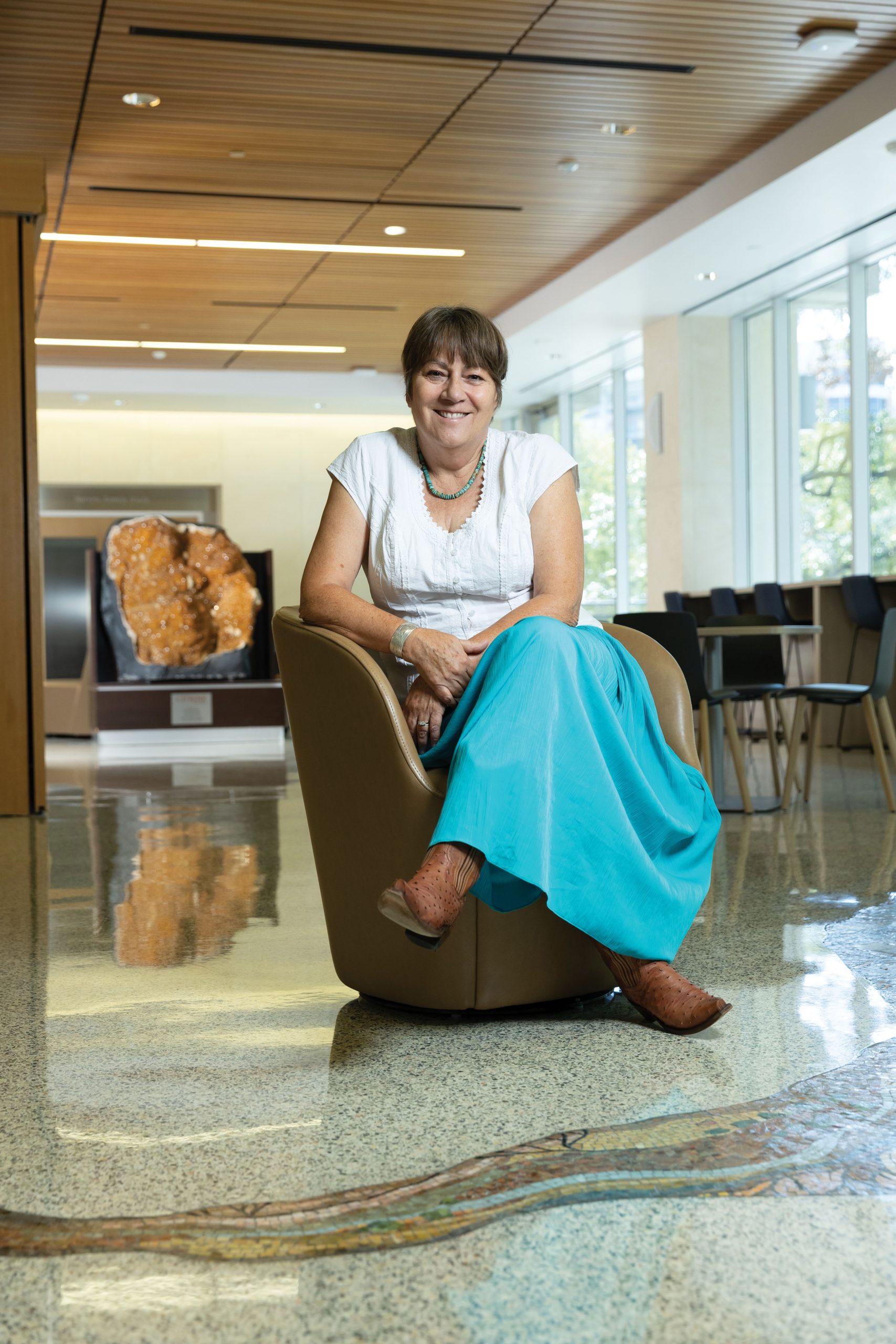
After six years leading the Jackson School of Geosciences, Dean Claudia Mora is leaving behind a stronger and more cohesive institution.
BY ANTON CAPUTO
W
hen Claudia Mora took over the reins of the Jackson School of Geosciences, she was primed for a challenge that may have seemed unenviable to others.
“How can you take something that’s already very good and make it even better?” she remembers thinking. “It seemed like a really fascinating management challenge. I was so excited.”
Mora had a lifetime of experience that positioned her well for the job: a long and successful career in academia running her own lab as a professor and department head at the University of Tennessee, Knoxville, followed by an equally successful career at Los Alamos National Laboratory, where she honed her skills as a line manager in the Earth science and chemistry divisions, working her way up to deputy division leader.
She wasn’t looking to leave Los Alamos, but said she jumped at the chance when called about the opportunity to apply. The role of dean at the Jackson School seemed like the perfect pinnacle to her career. She hit Austin raring to go and started getting to know her new job, her new city and the Jackson School.
And then EVERYONE went home.
Mora officially started her role as dean on Feb. 1, 2020, during those uncertain days when the COVID-19 virus was first making news across the country. By March 17, as the steady drip of news became overwhelming, then-UT President Gregory L. Fenves announced that students would not return from spring break and all classes would be moving online for the remainder of the semester.
So, instead of getting to know staffers, faculty members and students, Mora began her term leading the school through the monumental task of transitioning to virtual classes, communicating the new reality to students, and preparing for a whole new way of teaching and operating the school.
“I didn’t really have the opportunity to sit down and talk with people and develop comfortable relationships with them,” she said. “It was a difficult way to start.”
Still, over countless Zoom meetings and video messages, the Jackson School trucked along, reopening most of its labs under new protocols almost immediately and scrambling not only to educate students, but also to help them through the physical, emotional and financial challenges that the pandemic posed.
Mora’s term began with a colossal crisis thrust upon by the outside. Coincidentally, it is ending six years later in a similar manner, with deep cuts in federal science funding and rapidly changing federal priorities.
Despite these challenges, the Jackson School is on sound footing. During her six-year tenure, Mora has reshaped the school, pulling the three units that make up the Jackson School closer together, directing the focus of education and research toward solution-driven science, and revamping finances in a way that has the school ready for the future.
“We’re not just on solid ground — we are very well positioned and prepared for what is going on right now,” said Danny Stockli, chair of the Department of Earth and Planetary Sciences. “She created financial resilience. That’s really an incredible accomplishment.”
LAND OF ENCHANTMENT
Mora wasn’t born into geology, but she grew up in New Mexico, a place where its wonders are ever present. She loved the outdoors as a child, but not really rocks or geology specifically. Her introduction to the science was in high school when her sister, who was going to college to be a geologist, dragged her along on a mapping assignment. Mora spent the time chasing a gecko and trying to avoid snakes. At the end of the day, her sister showed her the geological map she had created.
“I realized you could actually look at rocks and conceive of their three-dimensional origin and describe that story,” she said. “I really found that interesting.”
The experience didn’t quite convert Mora to geology, but it did prompt enough interest for her to choose it to meet her lab science requirement when she attended the University of New Mexico as an undergrad (or as she likes to call it: UNM, “University Near Mom”).
She was originally an English major and aspiring poet, but geology eventually hooked her, and she changed her major. From there, Mora went to Rice University for her master’s and then the University of Wisconsin-Madison (UW) for her doctorate. She worked in mineralogy, metamorphic petrology and stable isotope geochemistry. Pursuing this kind of disciplinary diversity was driven into UW students, Mora said. And it’s a lesson that stuck with her for her entire career.
“Breadth is something to be valued in geosciences,” she said. “Being able to work across different parts of the science is important, and it gave me a lot more opportunities when looking for jobs.”
When Mora landed on the faculty at the University of Tennessee, Knoxville, she was the first female professor in the geology department and would later be the first female department head. It was during that time she made a discovery that would shape the rest of her career — she really liked leadership and administration.
“I found that trying to enable the science of everyone around me was just as much fun as doing my own science,” she said. “It’s not for everyone. You have to really love other people’s work and be driven to see that it goes forward as far as it can. You try to create an environment where people and the institution can be successful. I just enjoyed it a lot.”
Mora loved her job at the University of Tennessee, but fate (in the form of her spouse’s career) forced her hand — she found herself back in New Mexico as a spousal hire at Los Alamos. There, the lessons in scientific breadth learned in Wisconsin and her time in administration paid off, and she worked her way up to deputy leader of the chemistry division.
The combination of deep academic and national lab experience was critical to Mora’s success, said Demian Saffer, director of the University of Texas Institute for Geophysics. Saffer came from Penn State University to take up his position only a few months before Mora started as dean. He was involved in hiring his new boss.
Saffer said he believes the Jackson School is fundamentally unlike any other geosciences or Earth sciences program in the country. Others may have strong research units, such as Lamont-Doherty Earth Observatory at Columbia University or Scripps Institution of Oceanography at the University of California San Diego. But the Jackson School is in a category all its own, with two major research units tied to a world-class academic department, all together led by a dean who reports directly to the provost. This uniqueness makes it a little difficult for outsiders to comprehend.
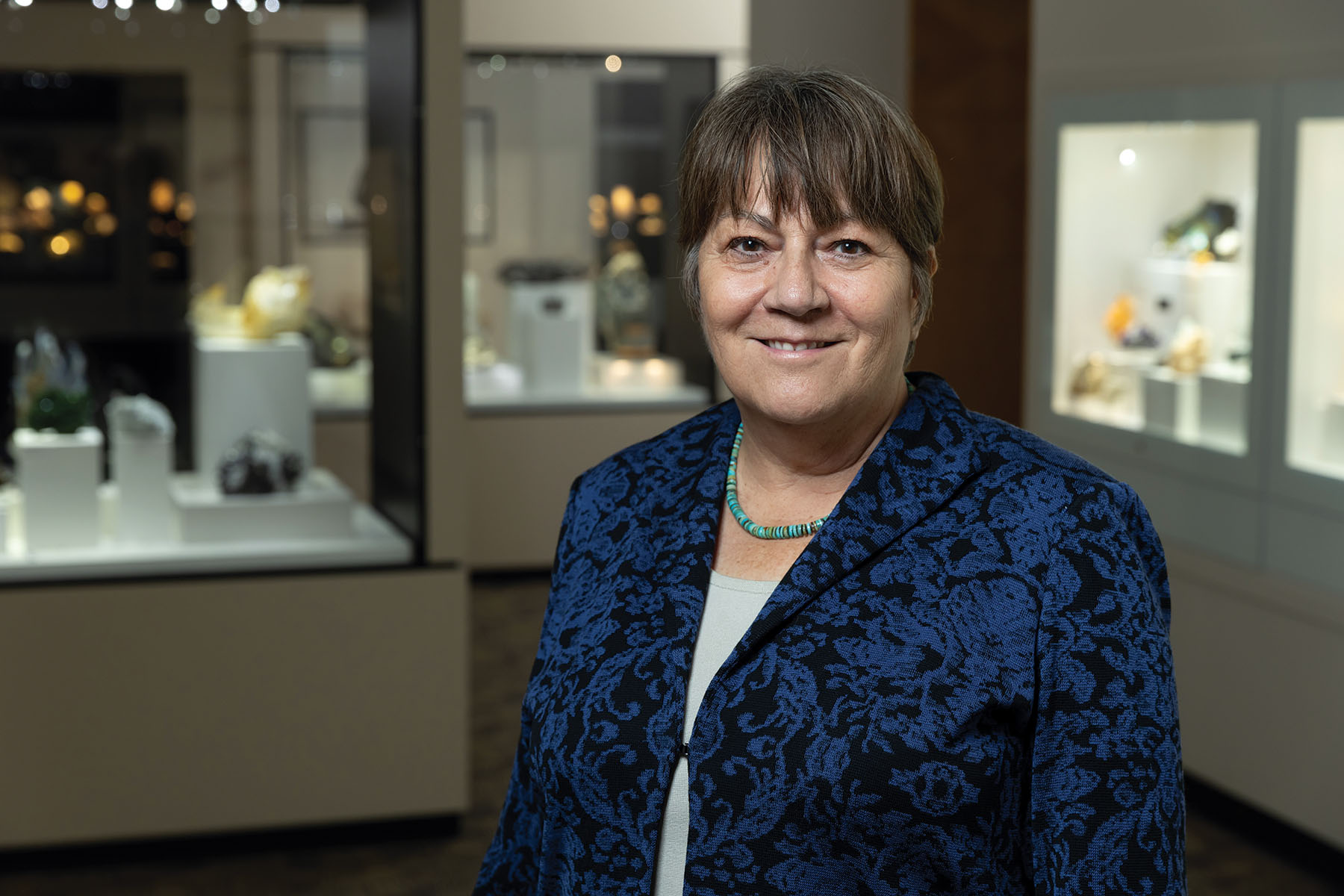
When Saffer saw Mora’s background, he thought she was the best fit.
“Having somebody who could understand all that, I saw as a key part of leadership and really valuable for the school as a whole,” Saffer said.
Six years later, he knows he was right. Mora’s creative and “feisty” relationship with UTIMCO (The University of Texas/ Texas A&M Investment Management Company) and UT’s leadership has ultimately freed up more funds for the Jackson School that have helped researchers to do great science, Saffer said. He also admires how she has brought the three units together and made them more collaborative.
20 YEARS IN
The Jackson School formed 20 years ago when Jack and Katie Jackson left their fortune to the UT Geology Foundation, “investing in the future of a countless number of people at The University of Texas at Austin, who will study and will continue to learn of the geology, the earth sciences, and the resources and the environment of the Earth.”
The gift was valued at $230 million, the largest donation at the time to a public university. It allowed UT to move the (then) Department of Geological Sciences from the College of Natural Sciences and combine it with two stand-alone research institutions, the University of Texas Institute for Geophysics and the Bureau of Economic Geology (also the State Geological Survey of Texas) to form the largest geosciences school in the country — a national powerhouse in the geosciences that now has a combined student body of more than 600.
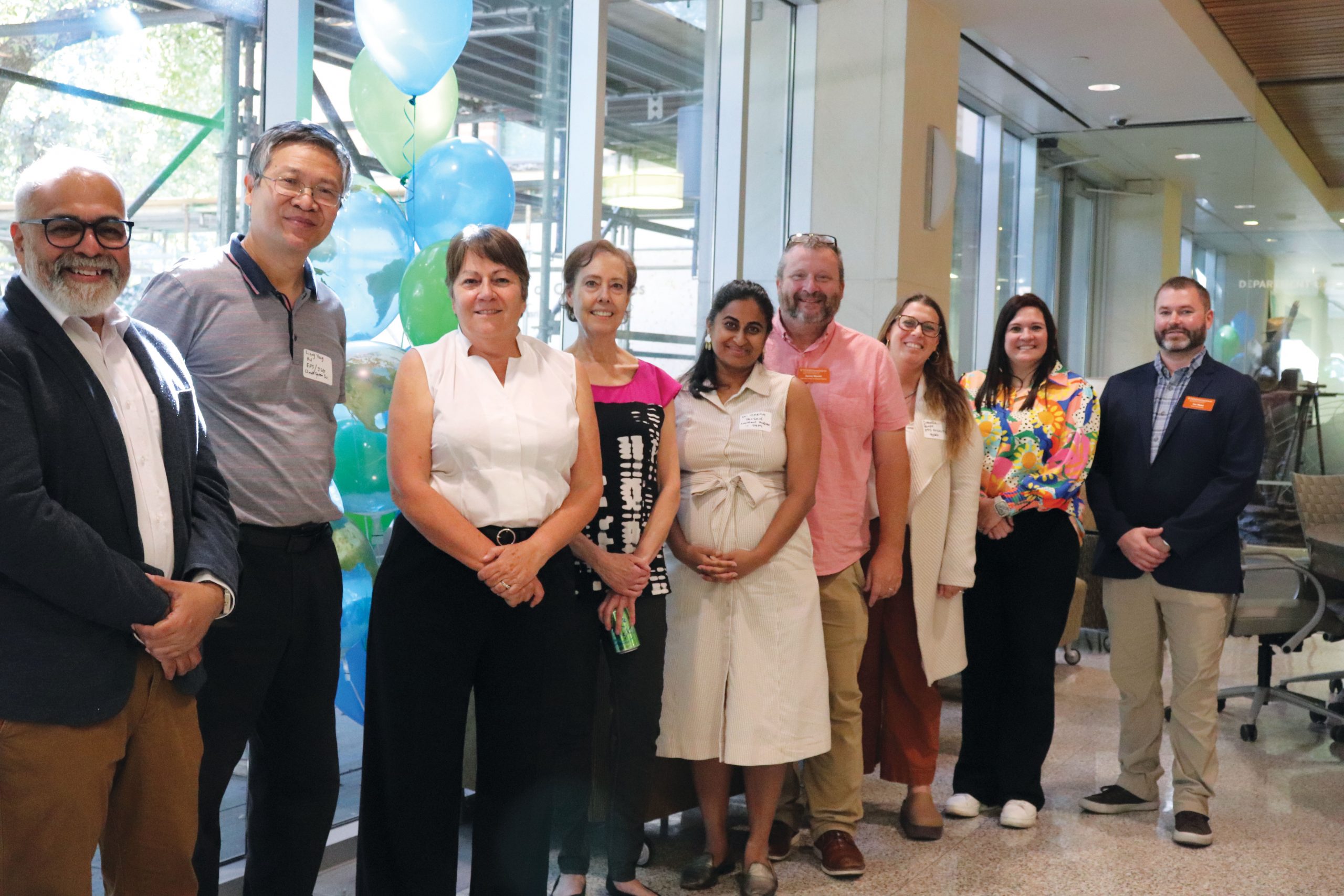
In many ways the Jackson School is a unicorn. The school brought together three units with their own distinct business models, cultures and identities forged by long histories (century-long histories in the case of the department and bureau). Two of its three units — the Bureau of Economic Geology and the Institute for Geophysics — are devoted primarily to research, and many of their top scientists were historically not faculty members, a setup that perpetuated cultural differences between the units.
To help build a more collective identity, Mora supercharged a move that started under previous Dean Sharon Mosher: reclassifying 120 research scientists as research professors, making them professional-track members of the faculty.
The change might seem like semantics, but Associate Dean for Research Michael Young said that bringing all research scientists under the faculty umbrella matters. Even though the Jackson School is one of the smaller schools at UT, it now has 60% of the research professors in the entire University.
Young said this change helped create equity among scientists and faculty. Many research scientists were already doing similar work as full faculty members: research, teaching and advising students. Like faculty members, research scientists were hired through competitive searches, met stiff requirements for promotion, led workshops and served on institutional committees. Still, students did not always recognize the wealth of expertise across the school that they could tap into. Having two of the three units at the J.J. Pickle Research Campus added to the challenge.
Young said Mora had to work hard to get the change approved by the provost and vice president for research, but she persevered. Young himself, who was an associate director at the bureau and a research scientist before taking his current role, is the only nontenured associate dean for research on UT’s campus. He said Mora was convinced that he was the right person for the job and pushed hard for the nontraditional appointment.
“The reclassification was controversial, but I think that for me it’s really important because I needed to have that equivalency,” he said. Saffer said the feeling reverberated throughout many parts of the school. “It put people more on equal footing,” he said. “It changed the sort of class distinction that I think was always lurking in the Jackson School, and so it changed the culture. It got buy-in from the research scientists at the units, and it made it easier for people like me to recruit top talent.
If there was an upside for starting her term under the restrictions of social distancing, it was that it gave Mora time to pore over the school’s unique and complex finances and become intimately familiar with the Jackson Endowment.
She worked closely on this with Elliott Pew, who was heading the Advisory Council’s (AC) finance committee and would go on to be the AC’s chair. What Mora found was that most of the endowment was allocated to long-term recurring expenditures that left little room for short-term opportunities or flexibility.
“She noted pretty early on that there were some changes that we probably needed to make financially,” Pew said. “But she didn’t do that right away. She really wanted to make sure that she understood exactly what the situation was before she started putting stuff in place.”
Pew said Mora wanted to invest the Jackson Endowment more strategically, spending less on overhead and long-term commitments and more on investments that could really advance the school and the science.
Mora said she felt the financial setup of the school contributed to the units competing for resources rather than working together. She actually stopped using pie charts in her school budget presentations to reject the notion that everyone needed to f ight for their piece of the pie.
She then went through the difficult process of taking back 15% of the funding the school was allocating to the individual units so that more of the money could be used for strategic investment to move the entire school forward. Stockli said that was a difficult process for the department and other units, but that Mora was able to get everyone on board.
“That ended up being a really, really good move,” he said. “The dean put constraints on us, and that made us first look at our own budget and figure out how we can do this and how can we actually turn this into a positive.”
She also set up a “quasi-endowment,” an interest-bearing account funded by the payout of the Jackson Endowment. Funds that once were held unspent for months — or even years — are now held in this “breakable piggy bank,” generating additional funds for the school. One of the direct outcomes of this new liquidity is the newly launched Strategic Investment Plan aimed at helping the school increase its national leadership in critical research areas (see story, page 69). This effort came out of a planning retreat where Mora brought together research leaders from all the units to meld the strategic plans of each unit and identify key common strengths and common interests where they could work together to advance the research impact of the school.
“The process of doing that was pretty strong in terms of breaking down barriers, getting people better connected,” Pew said. “It was about better communication, better sense of common purpose, that sort of thing. That really seems to be the pivotal event that kind of pushed the ball forward.”
Mora was also able to negotiate additional University-funded development (fundraising) positions in recognition of the school’s sizeable development allocation fees — money the school is required to pay to UT’s central development office. This has resulted in a significant increase in charitable donations to the Jackson School.
And all the while, she has reshaped the school’s leadership into a cohesive unit, Stockli said.
“One of the reasons why I signed up for the second term as the chair is just because she has assembled a very functional, goal-oriented, successful team that works well together,” he said. “She has shown incredible skill in terms of judging people and assembling really good people that work really well together.”
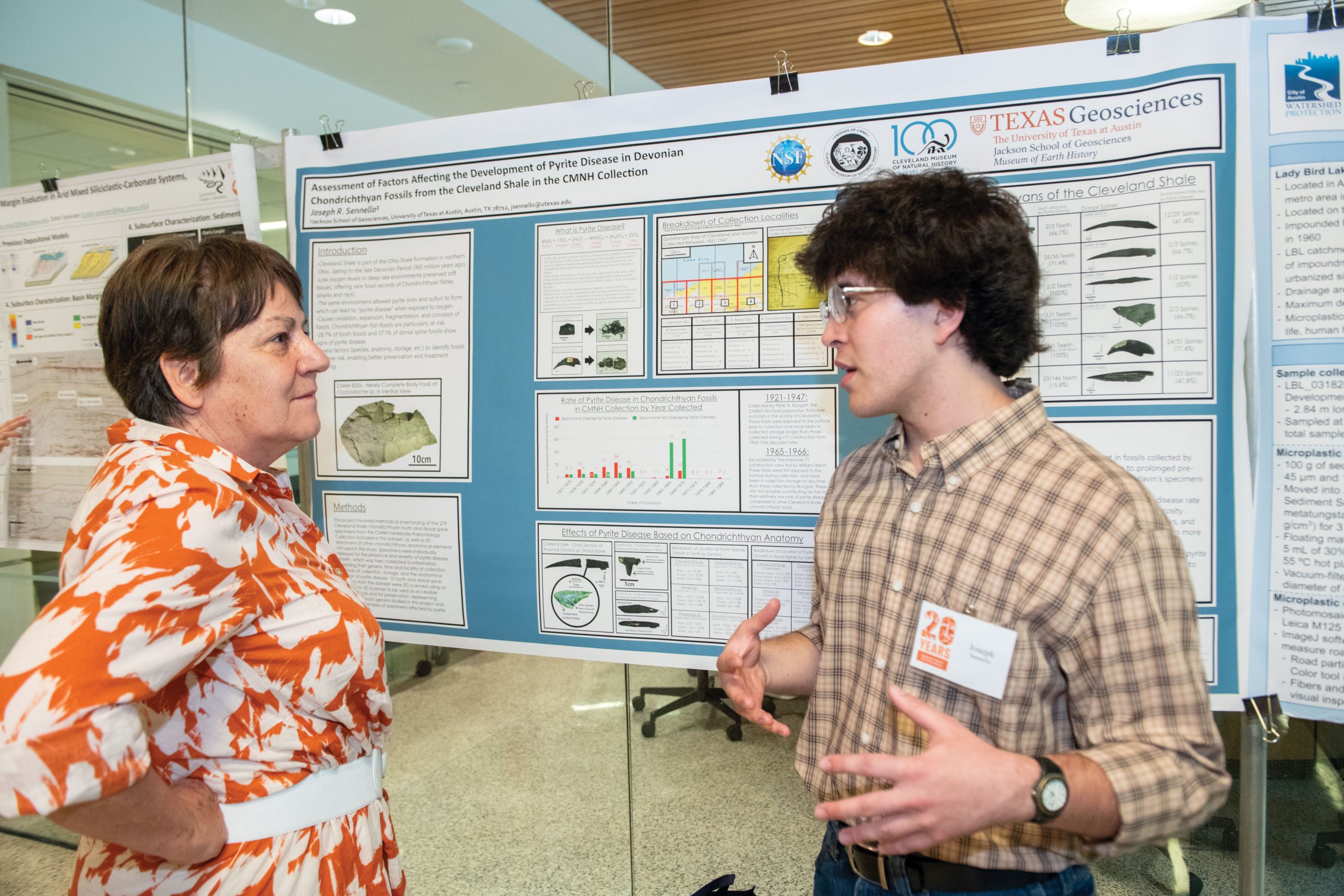
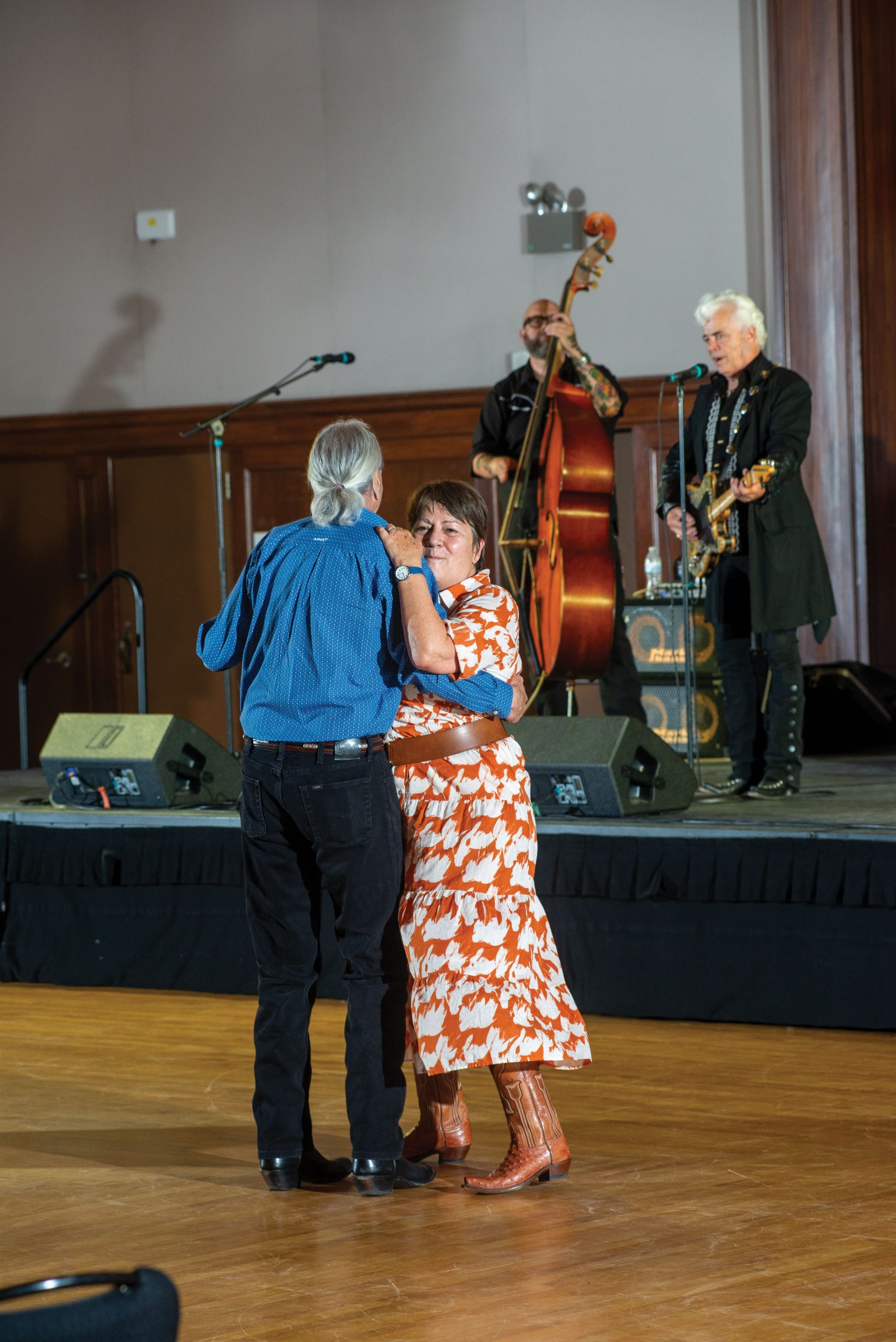
Mora’s eye for talent and institutional organization has done more than build a cohesive executive team. Under her leadership, the Jackson School has bucked the national trend of declining geosciences enrollment and has almost doubled undergraduate enrollment during her term, from 207 in 2020 to 411 in Fall 2025.
This increase has been attributed to many factors. They include a restructuring of the student services office, launching a new climate system science degree, and reworking the environmental science program (see story, page 47).
She also encouraged undergraduate participation in research by committing Jackson Endowment resources to match faculty contributions to student wages, creating more opportunities for student involvement in faculty research. Student pay was set at a level competitive with local service jobs ($19 per hour) so that students could work and learn, rather than flip burgers ”or mow lawns.
The program has been very successful, and last semester more than 100 Jackson School undergraduates participated in research in one way or another.
There’s a cold reality about serving in a leadership position like dean, said Stockli.
“You’re not there to make friends,” he said. “You have to make tough decisions, and these tough decisions involve personnel. They involve finances. They involve all kinds of strategic and tactical decisions that don’t always endear you to everybody. That can be isolating.”
The fact that Mora thrived in the position really belied her social nature. Chief Development Officer Andrew West said that Mora’s natural personality and sense of humor, particularly her ability to balance the “rock talk” with fun, was a tremendous hit with alumni.
“She is very passionate about the students, and that really came across,” he said. “She was always very present when meeting with folks. She was never distracted. They really appreciated that.” Stockli counts her as a close friend and mentor. And bureau Director Lorena Moscardelli saw firsthand what she described as a balance of professionalism and kindness when Moscardelli threw her hat into the ring to the lead the bureau (see story, page 91).
“Not every leader has the capacity to operate at that level,” Moscardelli said, adding that Mora also endeared herself to her team by being a fierce advocate for the school and its students, faculty and staff.
“She’s a force of nature,” Moscardelli said. “Once her head is into something, she will push and kick and do whatever is needed to make it happen. People who work for her really appreciate that. I certainly do.”
Perhaps there is no better illustration of Mora’s approach to management than her answer to a question asked at her interview for the dean position: name your greatest accomplishment. The answer involves her second marriage.
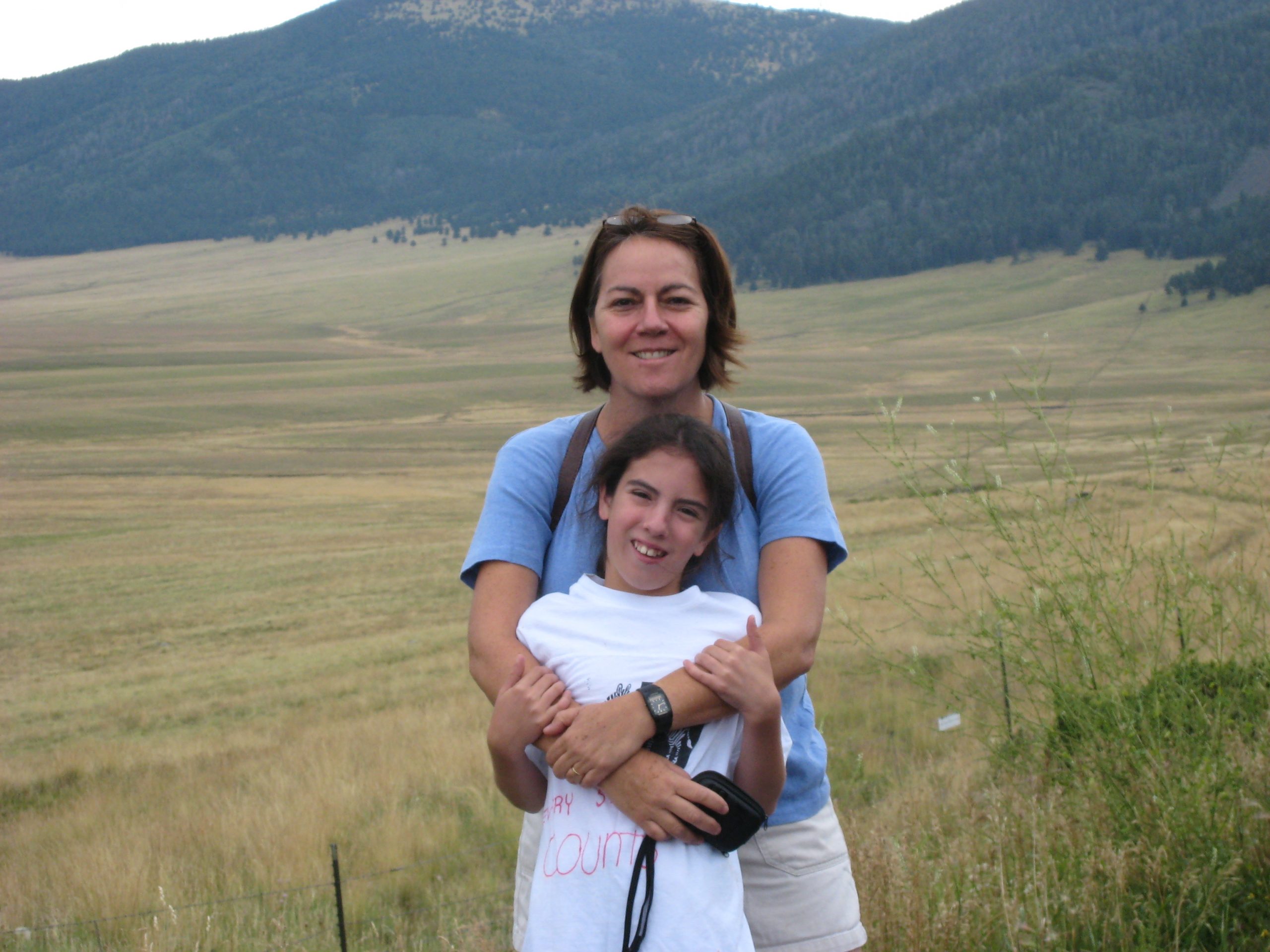
“I thought about it some, and I said, ‘Ten years ago, my husband and I blended a family of five teenagers between the ages of 13 and 19 — five,’” Mora said. “And now, they love each other and they love us. I don’t think I could have achieved anything more successful than that. The ultimate management problem, right?”
For more information, email awest@jsg.utexas.edu
Mora said her next step is not set in stone. She will be president of the American Geosciences Institute next year. And she will return to her home in Taos, New Mexico — a thick-walled adobe built in the 1860s, and her fruit trees, which draw water from the Acequia Madre del Rio Chiquito. Being a parciante (member) of the acequia is how she and her husband, Pete Maggiore, have built community in Taos. She said she might add a horse to the family again, or even some miniature goats. Ultimately, she wants the freedom to pursue intellectual interests, to travel and to see her children — all five of them
When she looks back at her time at the Jackson School, she sees her legacy as one of solidarity of three great units — the Department of Earth and Planetary Sciences, the Bureau of Economic Geology, and the University of Texas Institute for Geophysics — learning to live and work as one.
“The three pillars underneath the umbrella are now working together and talking together, dreaming together in ways they didn’t used to,” Mora said. “We couldn’t do it all in six years, but we’ve made progress. I hope the next dean comes in and the team makes more progress. And maybe now, that’ll be a bit easier to do.

The University of Texas at Austin
Web Privacy | Web Accessibility Policy | Adobe Reader