
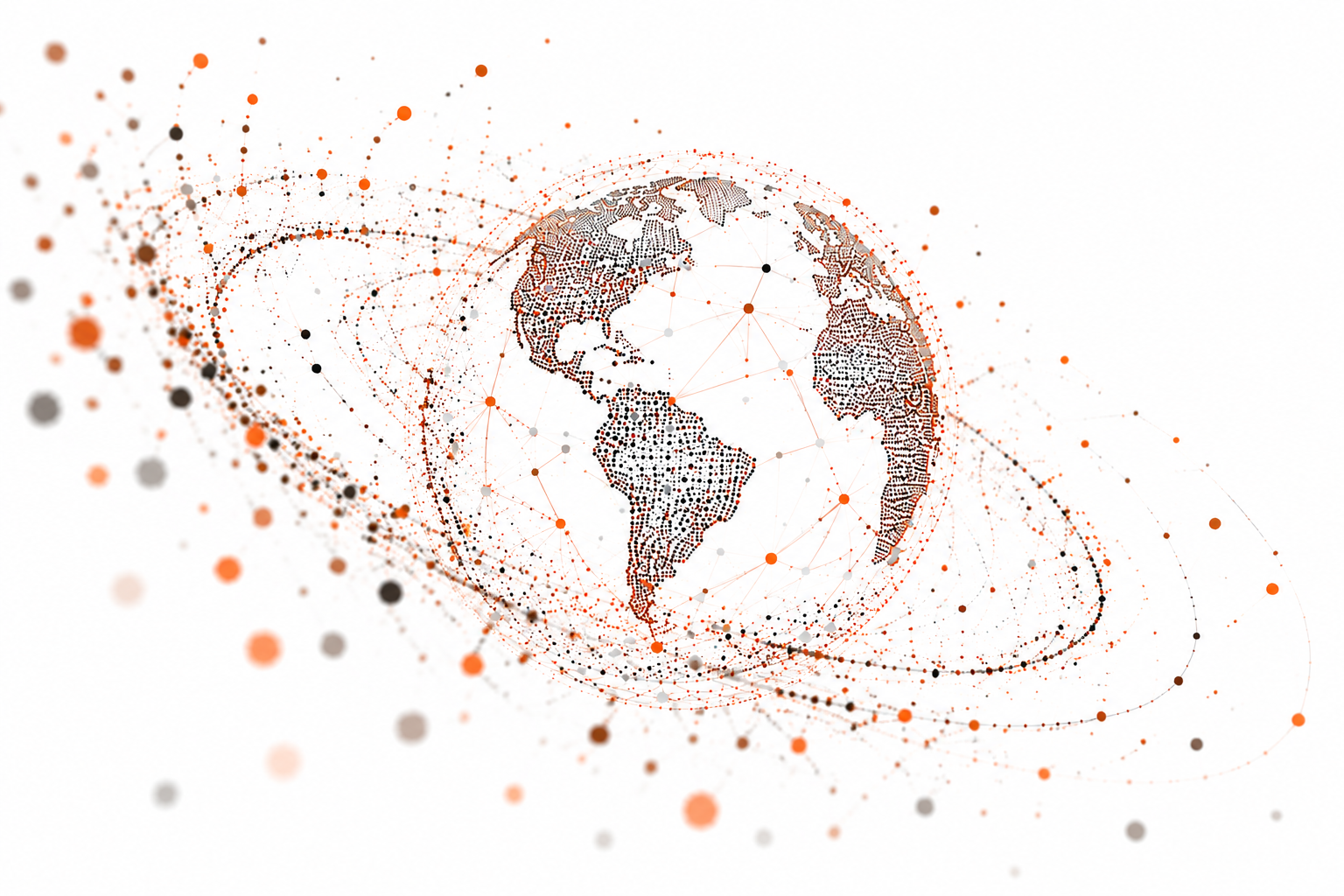
Geoscience AI at the Jackson School
AI Across Earth and Planetary Science
Jackson School researchers have long used machine learning to address questions across the geosciences, and a growing group of faculty now makes AI central to their work.
Research here spans the entirety of the geosciences — from solid Earth, to water and ice, to the atmosphere, all the way to other planets and moons.
Machine learning and AI are changing how this research is done, and Jackson School researchers are developing methods to make new discoveries in each of these areas. The school supports this work with a dedicated computational science team, a graduate certificate, and a new series of AI focused events.
Where AI meets Earth science.
-
Subsurface Imaging, Interpretation & Quantum Computing
Neural networks detect faults, characterize reservoirs, and identify patterns in sparse subsurface data. Researchers are also designing inversion algorithms for quantum computers.
-
Earthquake & Hazard Modeling
Graph neural networks and data from real-time seismic networks speed up simulations of earthquake cycles and ruptures and support hazard assessment.
-
Digital Twins & Data-Driven Simulation
AI-powered replicas of real systems, such as cities and coastlines, let researchers explore “what if” scenarios in real time.
-
Hydrology & Remote Sensing
Hybrid models that combine physics and machine learning improve streamflow, flood, and groundwater predictions while preserving physical understanding of the systems. Machine learning applied to satellite data improves estimates of water storage.
-
Glaciers, Ice & Sea Level
Machine learning maps glacier termini in satellite imagery and helps forecast how ice sheets and sea level will respond to a changing climate.
-
Community & Ecosystem Resilience
Knowledge-guided AI integrates remote sensing, ground observations, and Earth system models to assess wildfire and hydroclimatic risks, understand ecosystem functioning, and inform strategies that strengthen community and ecosystem resilience.
-
Energy, Earth Resources & Coupled Subsurface Processes
AI methods accelerate modeling of interacting thermal, hydrological, biogeochemical, and geomechanical processes. Applications span geothermal energy, reservoir simulation, well-log analysis, carbon cycling and storage, greenhouse gas emissions, and environmental and geohazard risk assessment.
-
Climate, Weather & Cities
AI-driven tools translate climate and weather data into actionable information, from heat-vulnerability mapping to microclimate models for marathon routes.
Strengthen your geosciences education with machine learning.
The graduate certificate in Machine Learning and Data Analytics in Geosciences (opens in new tab) teaches students how to use modern data analytics tools and machine learning to solve Earth science problems involving large volumes of data, such as climate modeling, seismic imaging, earthquake modeling, and satellite mapping.
Courses in the certificate include
- GEO 396D.1 Introduction to Machine Learning in the Geosciences (opens in new tab)
- GEO 392P Python for Geoscience Research and Data Analytics
- GEO 396D.2 Applications of Data Analysis, Visualization, and Machine Learning
- GEO 396D.3 Data Analytics and Geostatistics
- GEO 396D.4 Subsurface Machine Learning
- GEO 396D.5 Machine Learning Research, Advanced Topics and Capstone Research Project
- GEO 393D 3D Analysis of Volumetric Data
Other ways to get involved
- Geosciences Hackathon (opens in new tab)
- AI round table and training events
Geospatial and Geographic AI Courses at UT
- GRG 327G/CS 378 Introduction to Geospatial Artificial Intelligence
- GRG 356T Geospatial Semantics and Geo-Text Mining
- GRG 396T Graduate-Level Seminar in GeoAI
- GRG 460G Environmental GIS
- GRG 356T Spatial Data Science and Maps
- GRG 356T Generative AI in a Geospatial World
- GRG 396T Spatial Data Science and GeoAI
Collaborators and resources at UT Austin
The Jackson School has strong ties to the Texas Advanced Computing Center (opens in new tab) and Oden Institute for Computational Engineering and Sciences (opens in new tab). These partnerships give students and researchers access to high-performance computing, specialized expertise, and opportunities for collaboration.
Partner centers and groups
- Computational Research in Ice and Ocean Systems Group (opens in new tab)
- Center for Scientific Machine Learning (opens in new tab)
- Center for Subsurface Modeling (opens in new tab)
- Optimization, Inversion, Machine Learning, and Uncertainty for Complex Systems (opens in new tab)
- Computational Hydraulics Group (opens in new tab)
UT is pioneering the future of artificial intelligence (opens in new tab)
All University of Texas at Austin students and faculty members have access to UT Sage (opens in new tab), an AI tutor and virtual instructional designer that supports the responsible use of generative AI in teaching and learning.
Other UT resources and policies
Researchers using AI and machine learning in their work.
-

Professor
Thorsten Becker
is a geodynamicist who uses machine learning surrogates to speed up Bayesian model inference and the modeling of earthquake rupture dynamics.
Profile for Thorsten Becker (opens in new tab) -
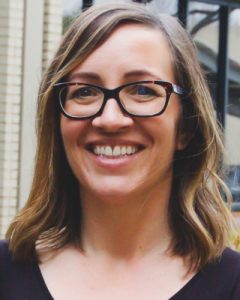
Professor
Ginny Catania
is a glaciologist who uses machine learning to understand ice sheet processes.
Profile for Ginny Catania (opens in new tab) -
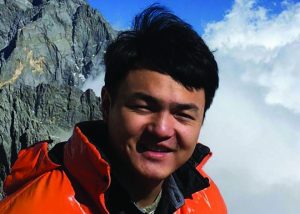
Research Associate Professor
Yangkang Chen
is a computational seismologist who develops AI methods for seismic imaging and earthquake monitoring.
Profile for Yangkang Chen (opens in new tab) -
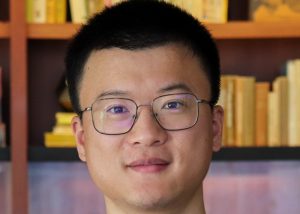
Assistant Professor
Dapeng Feng
is a hydrologist who specializes in developing hybrid physics-AI models to improve simulation and understanding of the terrestrial water cycle.
Profile for Dapeng Feng (opens in new tab) -
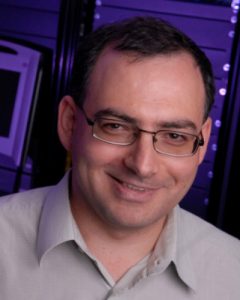
Professor
Sergey Fomel
is a computational geoscientist who uses synthetic data to train neural networks to detect faults in real seismic imaging data.
Profile for Sergey Fomel (opens in new tab) -
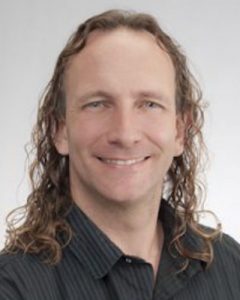
Research Professor
Sean Gulick
is a marine and planetary geophysicist who uses machine learning to analyze geophysical data, rock-core images and help reconstruct geological events.
Profile for Sean Gulick (opens in new tab) -
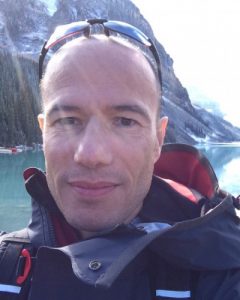
Professor
Patrick Heimbach
is a computational oceanographer who applies machine learning to understand the role of the global ocean, sea ice and the polar ice sheets in the climate system.
Profile for Patrick Heimbach (opens in new tab) -
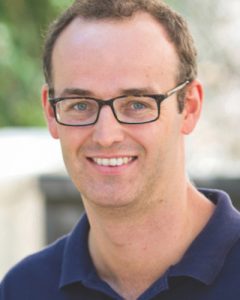
Professor
Marc Hesse
is a computational geoscientist who uses physics informed neural networks to unravel the fluid mechanics of groundwater.
Profile for Marc Hesse (opens in new tab) -
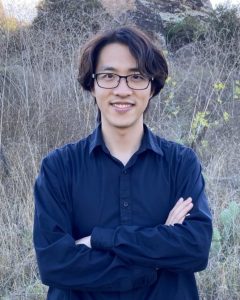
Research Assistant Professor
Zhe Jia
is a computational geophysicist who uses physics-informed artificial intelligence to decipher how earthquakes rupture.
Profile for Zhe Jia (opens in new tab) -
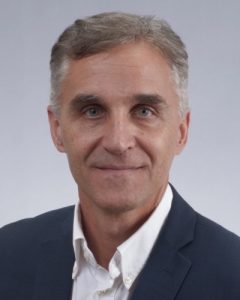
Research Associate Professor
Toti Larson
is a geochemist who developed CorePy, an open-source Python package for sharing subsurface and geological characterization workflows.
Profile for Toti Larson (opens in new tab) -
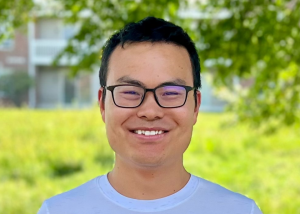
Assistant Professor
Fa Li
is an Earth scientist who uses knowledge-guided AI to study wildfires, hydroclimatic hazards, and ecosystem functioning and resilience.
Profile for Fa Li (opens in new tab) -
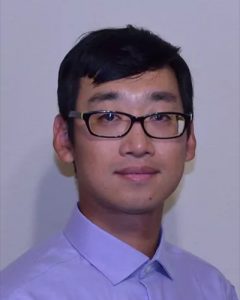
Senior Computational Geoscientist
Dunyu Liu
is a computational geoscientist who uses AI to accelerate earthquake dynamics and other Earth and planetary simulations.
Profile for Dunyu Liu (opens in new tab) -
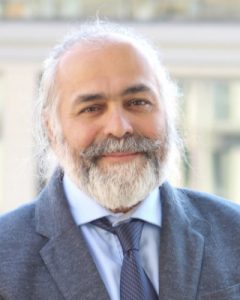
Professor
Dev Niyogi
is a climate scientist who uses machine learning to create digital twins of cities that represent thermal comfort, wildfire risk, and other factors.
Profile for Dev Niyogi (opens in new tab) -
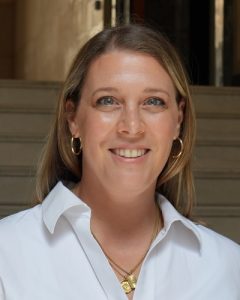
Associate Dean for Research
Daniella Rempe
is a hydrologist who applies machine learning to understand water availability to plants and streams.
Profile for Daniella Rempe (opens in new tab) -
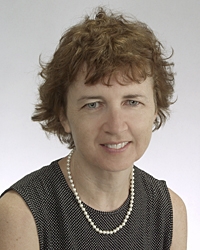
Research Professor
Bridget Scanlon
is a hydrogeologist who uses machine learning to improve estimates of global water storage and predict flooding.
Profile for Bridget Scanlon (opens in new tab) -
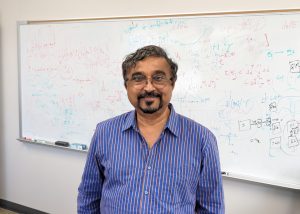
Professor
Mrinal Sen
is a computational geoscientist who solves inverse problems in the subsurface and is developing machine learning models for classical and quantum computers.
Profile for Mrinal Sen (opens in new tab) -
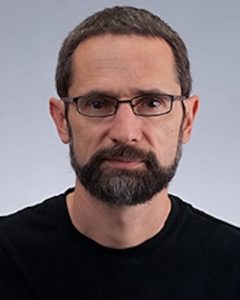
Research Professor
Zoltan Sylvester
is a sedimentary geoscientist who uses machine learning to identify and measure sediment grains in images.
Profile for Zoltan Sylvester (opens in new tab)
Help with your project.
The Jackson School has a dedicated team of computational scientists with expertise in AI and machine learning. The team works with faculty, researchers, and students on code development, model training, and use of high-performance computing resources at TACC. The team is growing; see the open position.
Want to stay in the loop on all things AI at the Jackson School?
Questions about AI and computing
Thorsten Becker
Special Advisor to the Dean on AI & Computing
twb@ig.utexas.edu