Biographic Sketch
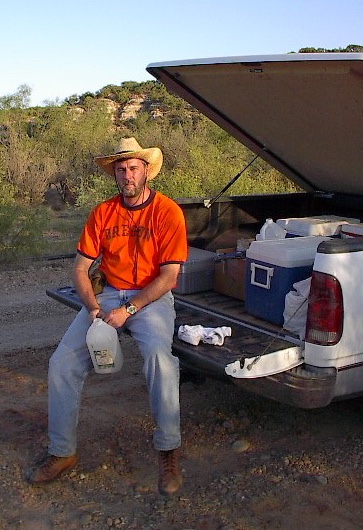 Nathan Miller is a research scientist in the Department of Geological Sciences specializing in laser ablation and quadrupole ICP-MS. His principal research interests lie in the fields of global change and sedimentary geochemistry as applied to modern and ancient depositional settings, and include chronostratigraphy, carbonate geochemistry, and paleoceanography. He is particularly interested in organic-rich sequences in space and time, and the impact of life processes (including anthropogenic effects) on the stratigraphic record. He uses geochemical, isotopic, and GIS techniques, in addition to good old-fashioned field geology and petrography. Nathan Miller is a research scientist in the Department of Geological Sciences specializing in laser ablation and quadrupole ICP-MS. His principal research interests lie in the fields of global change and sedimentary geochemistry as applied to modern and ancient depositional settings, and include chronostratigraphy, carbonate geochemistry, and paleoceanography. He is particularly interested in organic-rich sequences in space and time, and the impact of life processes (including anthropogenic effects) on the stratigraphic record. He uses geochemical, isotopic, and GIS techniques, in addition to good old-fashioned field geology and petrography.
Projects of active and ongoing interest include: (1) Evaluating Neoproterozoic climate change (in Northern Ethiopia, Middle East) and its relationship to the Snowball Earth Hypothesis; (2) Discerning controls of REE distributions in organic carbon rich depositional systems; (3) Deciphering controls of microbial dolomite occurrence in organic rich depositional settings; (4) Determination of high-resolution chemostratigraphies in environmentally sensitive growth-banded sedimentary records (speleothems, microbialites, cements, cap carbonates); (5) Use of C, O, S, & Sr isotopic tracers in defining natural solute origins in the Red River system. He has taught a diversity of Earth Science courses since 1995 and previously worked in the energy industry (ARCO/Mobil) in hydrocarbon exploration, reservoir characterization and development, and delineation of petroleum source rock systems. He currently teaches courses in inorganic mass spectrometry (GEO 392F/343Q). |